Choosing between metal roofing vs shingle roofing in Norcross is one of the most important decisions you will make as a homeowner. Your roof protects everything you own, and in Gwinnett County, it faces unique challenges that demand careful consideration. From intense summer heat to sudden thunderstorms, the material you choose affects your home’s safety, comfort, and long-term value. At GCR Construction & Roofing, we have spent 15 years helping Norcross families navigate this decision with honest guidance and expert craftsmanship. This comprehensive guide breaks down everything you need to know about both roofing options, specifically tailored to the realities of living in our Georgia community.
Whether you live in a historic Norcross neighborhood or a newer Suwanee subdivision, the right roofing material depends on your specific situation. We are not here to push one product over another. Instead, we want to give you the facts so you can make a confident, informed choice for your family and your budget. Explore our roofing services to see how we can help with whatever direction you choose.
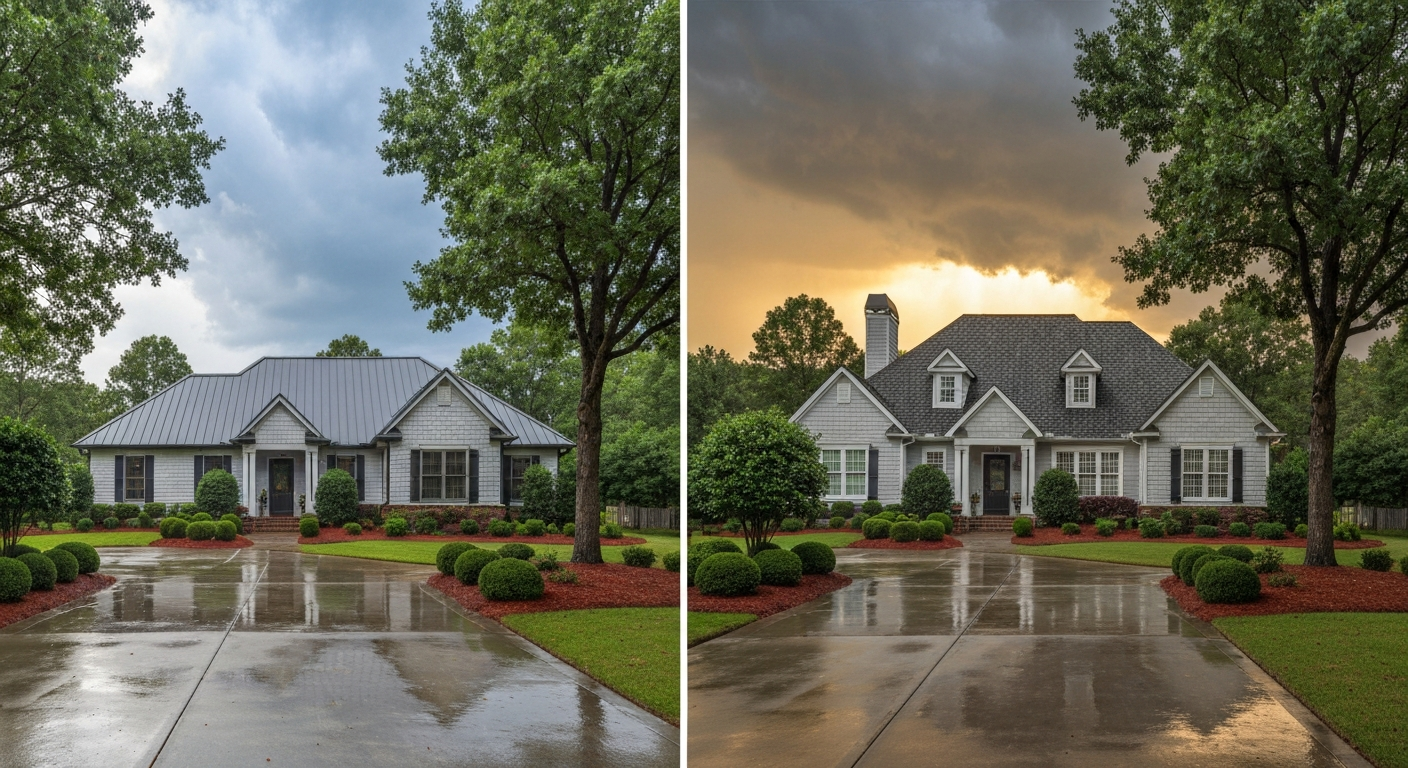
Both metal roofing and asphalt shingle roofing have earned their place on homes throughout Gwinnett County. Each material brings distinct advantages, and understanding these differences helps you make the right choice for your specific needs.
Metal roofing has experienced significant growth across Georgia over the past decade. What was once primarily seen on commercial buildings and rural properties now graces homes in neighborhoods from Lawrenceville to Duluth. Modern metal roofing comes in styles that mimic traditional shingles, slate, and tile, making it appropriate for virtually any architectural style. Standing seam panels offer a contemporary look, while metal shingles blend seamlessly with traditional neighborhood aesthetics.
Homeowners in Lilburn and Snellville have increasingly turned to metal roofing for its durability and energy efficiency. The material handles Georgia’s demanding climate exceptionally well, which explains its growing popularity among homeowners who plan to stay in their homes long-term.
Asphalt shingles still cover the majority of homes in Norcross and surrounding areas. Their popularity stems from several practical factors. Shingle roofing offers an accessible entry point for homeowners with tighter budgets. The installation process is straightforward, and repairs are relatively simple when damage occurs. Shingles also come in countless colors and styles, making it easy to match existing neighborhood aesthetics or meet HOA requirements in communities throughout Dacula and Loganville.
The familiarity factor also matters. Most roofing contractors have extensive experience with shingle installation, and homeowners feel comfortable with a material they understand. This widespread expertise means competitive pricing and readily available repair services across Gwinnett County.
Georgia’s climate presents specific challenges that affect roofing performance. Our region experiences high humidity, intense UV radiation, dramatic temperature swings, and severe storms. These conditions test roofing materials in ways that differ from northern or western states. A roof that performs well in Arizona may struggle with Georgia humidity, while a material suited for Minnesota winters may not handle our summer heat effectively.
Understanding how each material responds to local conditions helps you predict performance and maintenance needs. The best roofing material for Georgia homes is one that handles moisture, heat, and storms while fitting your budget and aesthetic preferences.
METAL ROOFING VS SHINGLE ROOFING — NORCROSS COMPARISON
ASPHALT SHINGLES
METAL ROOFING (RECOMMENDED)
Data sources: Metal Roofing Alliance, NAHB, Energy.gov | Georgia averages 50+ thunderstorm days annually — Norcross homeowners benefit from impact-resistant roofing options.
Roof replacement represents a significant investment, so understanding how long each material will protect your home matters greatly. The lifespan difference between metal and shingle roofing is substantial and affects your total cost of ownership.
Quality metal roofing installed correctly on Norcross homes typically lasts between 40 and 70 years. Some metal roofs have protected homes for over a century. This exceptional lifespan means many homeowners never need to replace their roof again after installing metal. The material resists the factors that degrade other roofing types, including moisture, UV radiation, and biological growth.
Metal roofs do not crack, curl, or lose granules like shingles. They resist rot, mold, and insect damage. In the humid conditions common throughout Suwanee and Duluth, this resistance to moisture-related damage proves particularly valuable. The protective coatings on modern metal roofing resist fading and maintain their appearance for decades.
Traditional three-tab asphalt shingles typically last 15 to 20 years in Georgia’s climate. Higher-quality architectural shingles extend this range to 25 to 30 years with proper maintenance. However, Georgia’s intense UV exposure and humidity can accelerate wear, sometimes shortening these timelines.
Shingles degrade through several mechanisms. The granules that protect against UV damage gradually wash away with rain. Heat causes shingles to expand and contract, leading to cracks over time. Humidity encourages algae and moss growth, which traps moisture against the roofing material. These factors combine to limit shingle lifespan, particularly on south-facing roof slopes that receive maximum sun exposure.
Gwinnett County experiences average humidity levels between 60 and 80 percent during summer months. This persistent moisture affects roofing materials differently. Metal roofing sheds water completely and dries quickly after rain. Properly installed metal roofs leave no opportunity for moisture to penetrate or accumulate.
Shingle roofs handle humidity less effectively. While modern shingles include algae-resistant treatments, the textured surface can trap moisture. Over time, this moisture encourages biological growth and accelerates material breakdown. Regular maintenance, including cleaning and algae treatment, helps extend shingle life but adds to ownership costs.
Georgia receives abundant sunshine, which means significant UV radiation hitting your roof throughout the year. Metal roofing includes factory-applied finishes designed to reflect UV rays and resist fading. These finishes maintain their appearance and protective properties for decades.
Asphalt shingles rely on embedded granules to block UV radiation. As these granules wear away, the underlying asphalt becomes exposed and degrades more rapidly. Homeowners often notice this wear pattern on older shingle roofs, where the shingles appear lighter or patchy as granule loss progresses unevenly.
Understanding the true cost of metal roofing vs shingle roofing in Norcross requires looking beyond the initial installation price. While shingles cost less upfront, the long-term financial picture may favor metal depending on your plans for the home.
Asphalt shingle installation typically costs between $4 and $8 per square foot for materials and labor in Gwinnett County. For a typical 2,000 square foot roof, this translates to $8,000 to $16,000 depending on shingle quality and roof complexity. Architectural shingles fall at the higher end of this range, while basic three-tab shingles cost less.
Metal roofing installation runs between $8 and $16 per square foot, making the same 2,000 square foot roof cost $16,000 to $32,000. Standing seam metal roofing occupies the premium end, while metal shingles offer a more accessible entry point. The higher labor costs reflect the specialized skills required for proper metal roof installation.
| Factor | Metal Roofing | Asphalt Shingles |
|---|---|---|
| Initial Cost (2,000 sq ft) | $16,000 – $32,000 | $8,000 – $16,000 |
| Expected Lifespan | 40 – 70 years | 15 – 30 years |
| Replacements Needed (50 years) | 0 – 1 | 2 – 3 |
| Annual Maintenance Cost | $100 – $300 | $200 – $500 |
| Energy Savings Potential | 10% – 25% cooling costs | 5% – 10% with cool roof shingles |
| Insurance Discount Potential | Up to 35% | Minimal |
| Wind Resistance | Up to 140 mph | Up to 130 mph (best rated) |
| Fire Rating | Class A (non-combustible) | Class A available |
When calculating total cost of ownership, the picture shifts considerably. A homeowner installing shingles today will likely need at least one full replacement within 30 years, possibly two depending on material quality and maintenance. Adding replacement costs, ongoing maintenance, and potential repairs changes the equation significantly.
Consider a homeowner in Lawrenceville installing a roof today with plans to stay in the home for 30 years. Choosing mid-range shingles at $12,000 initially, plus one replacement at year 20 (adjusted for inflation, approximately $18,000), plus cumulative maintenance of $8,000, totals roughly $38,000. A metal roof at $24,000 initially, with minimal maintenance costs of $4,000 over 30 years, totals approximately $28,000. The metal roof costs more upfront but less over time.
This analysis assumes both roofs are properly installed and maintained. A poorly installed metal roof or neglected shingle roof will not achieve these projected lifespans. Quality workmanship matters as much as material choice, which is why choosing an experienced roof installation contractor in Gwinnett County is essential regardless of which material you select.
Both roofing materials add value to your home, but metal roofing typically provides stronger returns in competitive markets. Homes with newer metal roofs often sell faster and command premium prices because buyers recognize the long-term value. They appreciate not facing a roof replacement for decades after purchase.
New shingle roofs also boost home value, particularly when replacing visibly worn roofing. Buyers prefer move-in ready homes, and a recent shingle replacement removes a major concern from their minds. However, the value bump typically reflects the remaining useful life of the shingles rather than a true premium.
In neighborhoods across Snellville and Loganville, both roofing types appear commonly. Neither choice will seem out of place or negatively impact resale value, assuming quality installation and appropriate style selection.
Gwinnett County experiences severe weather throughout the year, from spring thunderstorms to summer hurricanes to occasional ice storms. Your roof serves as the primary defense against these events, making storm performance a critical factor in material selection.
Metal roofing excels in wind resistance. Most standing seam metal roofs are rated for winds up to 140 mph, exceeding the requirements for Category 4 hurricanes. The interlocking panel design prevents wind uplift that can tear away other roofing materials. Metal roofs rarely lose sections during storms, even when trees fall nearby and impact surrounding homes.
Quality architectural shingles achieve wind ratings between 110 and 130 mph when properly installed with enhanced nailing patterns. However, shingles remain vulnerable to uplift at edges and along ridge lines. Once wind gets beneath shingle edges, progressive peeling can occur, leading to significant damage. Three-tab shingles offer lower wind resistance and should be avoided in storm-prone areas.
Hail events occur periodically in Gwinnett County, typically during spring and summer storm seasons. Metal roofing handles small to medium hail without functional damage, though cosmetic denting may occur with larger hailstones. Thicker gauge metal and textured finishes minimize visible dent damage.
Impact-resistant shingles have improved significantly and now carry Class 4 ratings for hail resistance. These specialized shingles use modified asphalt or polymer reinforcement to absorb impacts without cracking. Standard shingles remain vulnerable to hail damage, which can crack the material and accelerate granule loss.
Both roofing types qualify for potential insurance discounts when meeting impact-resistance standards. Check with your insurance provider about available discounts, as these can offset initial installation costs over time.
Georgia summer storms often drop several inches of rain in short periods, testing drainage capacity and water resistance. Metal roofing provides superior performance in heavy rain conditions. Water sheets off the smooth surface rapidly, and the overlapping panel design creates multiple water barriers. Standing seam systems have raised seams that water cannot easily penetrate.
Shingle roofs rely on overlap and underlayment systems for waterproofing. Properly installed shingle roofs handle normal rain effectively, but extreme downpours can occasionally overwhelm drainage capacity. The key is proper installation with adequate underlayment and correct shingle overlap at all penetrations and valleys.
Both roofing systems require properly functioning gutters to manage water runoff. Our gutter installation and maintenance services ensure your drainage system handles whatever Georgia storms deliver.
Energy costs represent a significant ongoing expense for Gwinnett County homeowners, particularly during long summer cooling seasons. Your roofing material directly affects how much heat enters your home and how hard your air conditioning system must work.
Metal roofing reflects a significant portion of solar radiation rather than absorbing it. Light-colored metal roofs can reflect up to 70 percent of the sun’s energy, dramatically reducing heat transfer into your attic space. Even darker metal colors outperform equivalent shingle colors because the metal surface re-emits absorbed heat more effectively.
Energy-efficient roofing in Norcross makes a meaningful difference in cooling costs. Homeowners switching from dark shingles to reflective metal roofing typically report cooling cost reductions between 10 and 25 percent. In a home spending $200 monthly on summer cooling, this translates to savings of $20 to $50 per month during peak season.
Metal roofing with above-sheathing ventilation provides additional efficiency benefits. The air gap between the metal panels and roof deck allows heat to dissipate before reaching the interior, further reducing cooling loads.
Shingle manufacturers have developed cool roof technology to improve energy performance. These specialized shingles incorporate reflective granules that bounce more solar energy away from the roof. While not matching metal’s reflective capacity, cool roof shingles reduce heat absorption compared to standard shingles.
Homeowners choosing shingles for Duluth or Suwanee homes should consider cool roof options, particularly for south and west-facing roof sections that receive maximum sun exposure. The modest cost premium typically pays back through energy savings within a few years.
Proper attic ventilation enhances energy performance regardless of roofing material. Ridge vents, soffit vents, and adequate insulation work together with your roofing to minimize heat transfer. We assess ventilation as part of every roof installation in Gwinnett County.
Energy efficiency affects more than utility costs. Homes with poorly performing roofs develop hot spots, uneven temperatures, and uncomfortable upper floors during summer months. Better roofing reduces these comfort issues by limiting the heat that enters your home in the first place.
Metal roofing’s quick heat release also means faster cooling in the evening. As ambient temperatures drop after sunset, metal roofs shed accumulated heat rapidly, helping your home cool down naturally. This reduces air conditioning runtime during evening hours when many families are home and active.
With all this information, how do you decide between metal roofing vs shingle roofing for your Norcross home? The answer depends on your specific circumstances, priorities, and constraints.
If upfront cost is your primary constraint, shingle roofing offers an excellent balance of performance and affordability. Quality architectural shingles protect homes effectively throughout Gwinnett County at accessible price points. There is no shame in choosing shingles when the budget demands it.
If you can manage the higher initial investment and plan to stay in your home long-term, metal roofing often proves more economical over time. The elimination of future replacements and reduced maintenance requirements offset the premium cost. Consider financing options that spread costs over time while capturing immediate benefits.
Many Norcross neighborhoods and subdivisions have homeowner associations with architectural guidelines. These rules may restrict roofing materials, colors, or styles. Before committing to any roofing material, review your HOA covenants and submit plans for approval if required.
Most HOAs in Dacula and Loganville permit metal roofing when it mimics traditional materials like shingles or tile. Standing seam metal may face restrictions in some traditional neighborhoods. Working with an experienced local contractor helps navigate these requirements and identify compliant options that meet your goals.
Consider your neighborhood context as well. A metal roof that looks appropriate in a newer Suwanee development might seem out of place on a historic Norcross street. Matching neighborhood character maintains property values and community harmony.
Both materials offer extensive style options today. Metal roofing ranges from sleek contemporary panels to metal shingles indistinguishable from asphalt at street level. Asphalt shingles come in designer patterns that mimic expensive materials like slate and cedar shake.
Visit completed projects in your area to see both materials installed. Photos cannot fully capture how a roof looks on a real home in varying light conditions. We welcome prospective customers to tour recent installations across Lilburn and Snellville to see our work firsthand.
Your existing roof condition, structural capacity, and ventilation setup all affect which materials make sense for your specific situation. A professional inspection reveals factors you might not consider, such as deck condition, flashing wear, and ventilation adequacy.
Our free roof inspections for Gwinnett County homeowners include honest assessments without pressure. We examine your current roof, discuss your priorities and concerns, and provide recommendations based on your specific situation. Sometimes we recommend repairs rather than replacement when the existing roof has remaining life.
A professional inspection also identifies issues that must be addressed regardless of material choice. Damaged decking, insufficient ventilation, and flashing failures need correction during any roofing project. Understanding the full scope of work helps you budget accurately and avoid surprises.
Beyond roofing material, consider complementary systems that affect your home’s protection and appearance. Quality gutters channel water safely away from your foundation. Siding protects walls and enhances curb appeal. TPO roofing serves flat or low-slope sections that cannot support traditional materials. We offer all these services, providing coordinated solutions for complete home protection.
This common concern has minimal basis when metal roofing is properly installed. Modern metal roof installations include solid sheathing, underlayment, and attic insulation that absorb sound effectively. From inside a properly built home, rain on a metal roof sounds similar to rain on shingles. Some homeowners even find the subtle sound pleasant. The key factors are adequate attic insulation and proper installation over solid decking rather than open purlins. Commercial buildings and barns with exposed metal ceilings are louder, but residential installations differ significantly in construction method.
Most HOAs in Norcross and throughout Gwinnett County permit metal roofing, though specific restrictions may apply to panel styles and colors. Metal shingles that mimic traditional materials receive approval more readily than standing seam panels in some neighborhoods. We recommend reviewing your community’s architectural guidelines before selecting materials and submitting any required applications early in the planning process. Our team has experience navigating HOA requirements across Gwinnett County and can help you identify compliant options that meet your performance and aesthetic goals.
Energy savings vary based on several factors including your home’s size, insulation levels, roof color selection, and current cooling costs. Most Gwinnett County homeowners switching from standard shingles to reflective metal roofing report cooling cost reductions between 10 and 25 percent during summer months. For a home spending $1,500 to $2,500 annually on cooling, this translates to $150 to $625 in annual savings. Over the roof’s lifespan, these savings compound significantly and can offset a substantial portion of the installation premium compared to shingles.
Georgia building codes and Gwinnett County regulations permit metal roofing installation over existing shingles in some circumstances. This approach can reduce labor costs and waste disposal expenses. However, overlay installation requires careful evaluation of the existing roof’s condition, deck integrity, and current shingle layers. If the existing roof has multiple layers, moisture damage, or structural concerns, complete removal becomes necessary. Our inspections assess whether overlay installation makes sense for your specific situation or whether removal provides better long-term value.
Choosing between metal roofing and shingle roofing is a significant decision that affects your home for decades. The right choice depends on your budget, plans, and priorities. Both materials can protect Norcross homes effectively when properly installed by experienced professionals.
GCR Construction and Roofing has served Gwinnett County families for 15 years with honest guidance and quality craftsmanship. We install both metal roofing and shingle roofing, along with gutters, siding, and TPO systems for complete home protection. Our commitment is helping you make the best decision for your situation, not pushing whichever material generates higher margins.
Ready to explore your options? Contact us for a free roof inspection and honest recommendations tailored to your Norcross home. Call us today at (470) 913-7148 or email support@gcrcontracting.com to schedule your appointment. We serve homeowners throughout Gwinnett County including Norcross, Lawrenceville, Duluth, Snellville, Suwanee, Lilburn, Loganville, and Dacula.
Your Roof. Our Passion.