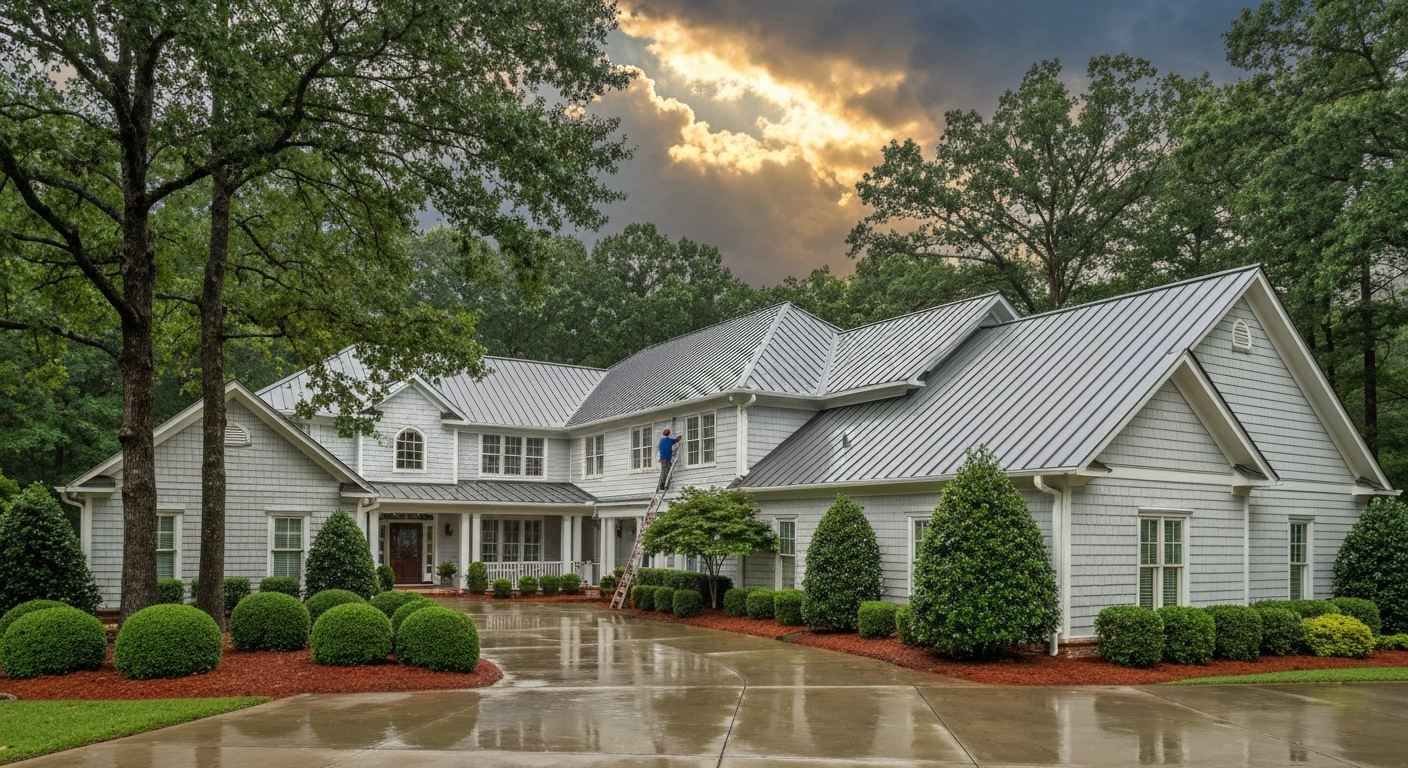
Metal roofing maintenance in Norcross requires a different approach than what you might find in generic online guides. Living in Gwinnett County means your roof faces unique challenges that homeowners in other regions simply do not encounter. From the yellow blankets of pine pollen that descend every spring to the severe thunderstorms that roll through during summer months, your metal roof needs localized care strategies to reach its full potential. At GCR Construction & Roofing, we have spent 15 years of experience helping homeowners throughout Norcross, Lawrenceville, Duluth, and surrounding communities protect their roofing investments. This comprehensive guide shares everything we have learned about metal roof care in Georgia, giving you the knowledge to maintain your roof properly while knowing when to call in professionals.
Metal roofing stands as one of the most durable roofing options available to Gwinnett County homeowners. When properly maintained, a quality metal roof can protect your home for 50 years or longer. However, that impressive lifespan depends entirely on how well you care for it throughout its service life. Understanding why maintenance matters helps you appreciate the value of the time and effort you invest in roof care.
Norcross sits in a climate zone that tests roofing materials in ways that other regions cannot match. Our humid subtropical climate brings hot, muggy summers and mild winters with occasional freezing temperatures. This combination creates specific challenges for metal roofing systems.
Summer temperatures in Gwinnett County regularly exceed 90 degrees Fahrenheit, while winter nights can drop below freezing. This temperature swing causes metal panels to expand and contract repeatedly throughout the year. Over time, this thermal cycling can loosen fasteners, stress seams, and create gaps where water might penetrate.
Humidity levels in the Norcross area often exceed 70 percent during summer months. This persistent moisture in the air can accelerate oxidation on metal surfaces, particularly around scratches or areas where protective coatings have worn thin. Without regular inspection and maintenance, small coating failures can become larger corrosion problems.
Gwinnett County experiences an average of 50 thunderstorm days per year, with the most intense activity occurring between April and August. These storms bring high winds, heavy rain, and occasionally damaging hail. Each severe weather event has the potential to damage your metal roof in ways that might not be immediately visible from ground level.
Wind-driven debris can scratch protective coatings, impact fasteners, and deposit organic material in valleys and around penetrations. Hail can dent panels and damage factory-applied finishes. Heavy rain tests every seam and flashing detail on your roof. Regular post-storm inspections catch these issues before they develop into leaks or structural damage.
A metal roof represents a significant investment in your home. Homeowners in Snellville, Suwanee, Lilburn, and throughout Gwinnett County choose metal roofing for its longevity, energy efficiency, and low lifetime cost. Protecting that investment through regular maintenance ensures you receive the full value of your roofing dollar.
Neglected metal roofs develop problems that compound over time. A loose fastener allows water infiltration that damages decking. A clogged valley traps debris that holds moisture against panels. A scratched coating permits rust to develop beneath the surface. Each small issue left unaddressed creates larger, more expensive problems. Regular maintenance catches these issues early when repairs remain simple and affordable.
ANNUAL METAL ROOF MAINTENANCE CHECKLIST
Source: Metal Roofing Alliance & National Roofing Contractors Association | Proper maintenance can reduce repair costs by up to 50%
Metal roof inspection in Gwinnett County should follow a seasonal schedule that accounts for our local weather patterns. Different times of year bring different challenges, and timing your maintenance activities appropriately maximizes their effectiveness.
Spring in Norcross brings two major challenges for metal roofing: severe storm season and pine pollen. March through May sees some of our most intense thunderstorm activity, including the tornadoes and damaging winds that occasionally affect Gwinnett County. Addressing storm damage quickly prevents secondary problems.
Your spring maintenance checklist should include:
Pine pollen accumulation deserves special attention during Georgia spring. The yellow-green powder that coats everything outdoors also collects on your roof. While pollen itself does not damage metal, it traps moisture and creates an environment where algae and mildew can grow. Accumulated pollen in valleys can also impede water drainage. Gentle cleaning removes pollen before it causes problems.
Summer brings intense heat and continued thunderstorm activity to Lawrenceville, Duluth, and throughout Gwinnett County. Metal roofs handle heat well, but the combination of high temperatures and severe storms requires ongoing attention.
Summer maintenance tasks include:
The dramatic temperature swings during summer thunderstorms stress metal roofing systems. A roof surface that reaches 150 degrees in afternoon sun can cool rapidly when a storm passes through, dropping temperatures by 50 degrees or more in minutes. This rapid thermal cycling tests fasteners and sealants throughout the roof system.
Fall represents the ideal time for comprehensive metal roof maintenance in Norcross. Weather conditions are generally mild, storm activity decreases, and you have the opportunity to address any issues before winter arrives. Homeowners in Loganville, Dacula, and surrounding areas should schedule professional inspections during this season.
Fall maintenance should address:
Leaf accumulation presents a significant challenge for Gwinnett County metal roofs. Oak, maple, and pine trees throughout our neighborhoods drop massive quantities of leaves and needles each fall. These organic materials collect in valleys, behind penetrations, and in gutters. Left in place through winter, they hold moisture against your roof and can promote corrosion or ice damming during rare freezing events.
Winters in Norcross are generally mild, but occasional freezing temperatures and ice storms do occur. Metal roofing handles winter weather well, but monitoring remains important during this season.
Winter maintenance includes:
Understanding the specific problems that affect metal roofs in our area helps you recognize issues early. Metal roof longevity tips begin with knowing what to look for during your maintenance inspections.
Thermal expansion represents the most common cause of metal roofing problems in Georgia. Our climate produces temperature extremes that cause metal panels to expand and contract significantly. A 100-foot metal roof can change in length by more than an inch between winter lows and summer highs.
This movement stresses fasteners in several ways. Screws can back out over time as panels shift beneath them. Overtightened fasteners restrict panel movement and can cause buckling or oil-canning. Fastener holes can elongate, reducing holding power and potentially creating leak points.
Regular fastener inspection identifies problems before they cause leaks. Look for fasteners that appear raised above the panel surface, rubber washers that have cracked or deteriorated, and any signs of rust staining around fastener locations.
Debris accumulation in valleys, behind penetrations, and along panel edges causes more problems than many homeowners realize. Organic debris like leaves, pine needles, and pollen holds moisture against metal surfaces. This trapped moisture accelerates corrosion and can promote the growth of algae and mildew.
Valleys deserve particular attention on Gwinnett County roofs. These low points collect debris from surrounding roof areas and concentrate water flow during rain. When debris dams form in valleys, water backs up beneath panels and can enter the roofing system. Regular valley cleaning prevents these problems.
Areas around penetrations like vent pipes, skylights, and chimneys also accumulate debris. The flashing and sealants in these locations require clear drainage to function properly. Debris buildup can direct water toward vulnerable seams rather than away from them.
The factory-applied coatings on metal roofing panels provide critical protection against corrosion. These coatings resist UV damage, shed water, and prevent oxidation of the underlying metal. When coatings become damaged or wear over time, the exposed metal becomes vulnerable.
Common causes of coating damage in Gwinnett County include:
Identifying coating damage early allows for touch-up repairs that extend roof life significantly. Look for areas where the metal color appears different, spots of rust or oxidation, and any locations where the surface texture feels rough rather than smooth.
Understanding how metal roof care compares to other roofing types helps homeowners appreciate the maintenance requirements of their chosen system. The following comparison outlines key differences between metal and shingle roofing maintenance.
| Maintenance Factor | Metal Roofing | Shingle Roofing |
|---|---|---|
| Expected Lifespan | 50+ years with proper maintenance | 15-30 years depending on material |
| Inspection Frequency | 1-2 times per year plus after storms | 1-2 times per year plus after storms |
| Cleaning Requirements | Periodic gentle cleaning for debris and stains | Algae treatment and debris removal |
| Common Repair Needs | Fastener tightening, sealant refresh, coating touch-up | Shingle replacement, flashing repair |
| Storm Damage Vulnerability | Resistant to wind, may dent from hail | Susceptible to wind uplift and hail damage |
| Professional Service Needs | Annual inspection recommended | Annual inspection recommended |
| Long-term Maintenance Cost | Lower due to extended lifespan | Higher due to shorter replacement cycle |
Both metal and shingle roofing systems benefit from regular professional attention. Our roofing services include comprehensive maintenance for both types, helping homeowners throughout Gwinnett County protect their investments regardless of their chosen roofing material.
Maintaining your metal roof effectively requires knowing which tasks you can handle safely and which require professional expertise. How to maintain a metal roof successfully involves a partnership between informed homeowner attention and periodic professional service.
Many metal roofing maintenance tasks fall within the capability of careful homeowners. Ground-level activities pose no safety risk and can be performed as often as needed.
Homeowner-appropriate maintenance includes:
The key to safe homeowner maintenance is staying off the roof whenever possible. Metal roofing surfaces can be slippery, particularly when wet or covered with pollen. Falls from roofs cause thousands of serious injuries every year. Ground-level observation accomplishes most inspection goals without risk.
Certain maintenance tasks require professional training, equipment, and expertise. Attempting these tasks without proper preparation can result in injury to you or damage to your roof.
Professional service is necessary for:
Professional roofers carry insurance that protects you from liability if an accident occurs on your property. They also have the experience to identify subtle problems that untrained observers might miss. A professional can often spot developing issues before they cause actual damage.
Annual professional inspections represent the single most valuable maintenance investment you can make for your metal roof. Even the most attentive homeowner lacks the training and experience to evaluate every aspect of roofing system performance.
Professional inspections provide:
At GCR Construction & Roofing, our inspection team examines every aspect of your metal roofing system. We check fasteners, evaluate sealants, assess coating condition, verify flashing integrity, and examine structural components. Our detailed inspection reports give you the information needed to make informed decisions about roof care.
Proper cleaning preserves your metal roof’s appearance and protective coating while removing debris that can cause damage over time. Understanding metal roof care in Georgia means knowing the right cleaning methods for our specific conditions.
Metal roofing requires gentle cleaning methods that remove contaminants without damaging protective coatings. Harsh chemicals and abrasive tools can cause more harm than the dirt they remove.
Safe cleaning solutions include:
Appropriate cleaning tools include soft-bristle brushes, microfiber cloths, and low-pressure spray nozzles. Never use wire brushes, abrasive pads, or scouring powders on metal roofing. These tools scratch protective coatings and accelerate corrosion.
For pine pollen removal, which Norcross homeowners face every spring, simple water rinsing often suffices when performed promptly. A garden hose with a spray nozzle can flush fresh pollen from roof surfaces before it bonds. Older, more stubborn pollen accumulation may require mild soap solution and gentle scrubbing.
Pressure washing metal roofing requires careful attention to technique and settings. While pressure washing can effectively clean metal surfaces, improper use causes coating damage and can drive water beneath panels.
If pressure washing is necessary, follow these guidelines:
Many roofing professionals recommend avoiding pressure washing altogether when gentler methods will accomplish the goal. The risk of coating damage or water infiltration often outweighs the convenience of pressure washing. For heavily soiled roofs, professional soft-wash services provide thorough cleaning without pressure damage.
The factory-applied coating on your metal roof represents critical protection against the elements. Every cleaning decision should prioritize coating preservation.
Coating protection strategies include:
Quality metal roof coatings last for decades under normal conditions. However, aggressive cleaning, harsh chemicals, or physical abrasion can shorten coating life significantly. Gentle, regular cleaning preserves coatings far better than infrequent intensive cleaning.
Regular professional inspections form the foundation of effective metal roofing maintenance in Norcross. Knowing when to call for professional evaluation ensures problems are caught and addressed promptly.
Gwinnett County experiences severe weather events that can damage even the most durable metal roofing systems. Scheduling professional inspection after significant storms protects your home and may be required for insurance claims.
Storm conditions that warrant professional inspection include:
Post-storm inspections should occur as quickly as possible after the event. Prompt documentation supports insurance claims and allows temporary repairs to prevent secondary damage. Waiting weeks or months after a storm makes it difficult to attribute damage to a specific event.
Beyond storm-triggered inspections, scheduling regular professional evaluations at appropriate times throughout the year maximizes the value of this service.
Optimal inspection timing for Gwinnett County includes:
Most metal roofs benefit from at least one professional inspection annually. Homes with older roofs, significant tree cover, or previous repair history may warrant twice-yearly inspection. Your roofing professional can recommend an appropriate inspection schedule based on your specific situation.
Between scheduled inspections, certain signs indicate that professional evaluation is needed regardless of timing. Recognizing these warning signs allows you to seek help before minor issues become major problems.
Contact a roofing professional if you observe:
Early intervention on these issues typically costs far less than repairs needed after problems have progressed. When in doubt, professional inspection provides answers and peace of mind.
Metal roofs in Norcross should receive professional inspection at least once annually, with additional inspections after any significant storm event. The ideal timing for annual inspection is late spring or early fall when weather conditions allow thorough evaluation and any identified repairs can be completed before extreme weather arrives. Homes with older roofs, extensive tree cover, or known previous issues may benefit from twice-yearly professional inspection. Between professional visits, homeowners should conduct visual observation from ground level after every significant storm and at least monthly during peak storm season from April through August. This combination of professional expertise and homeowner vigilance provides comprehensive protection for your roofing investment.
Walking on metal roofing is generally discouraged for homeowners due to significant safety risks and potential for roof damage. Metal surfaces become extremely slippery when wet, covered with pollen, or affected by morning dew. Even experienced roofers use specialized equipment and techniques when walking on metal roofs. If you must access your roof, wear soft-soled shoes with good grip, choose dry conditions with moderate temperatures, and step only on raised areas of standing seam panels or directly over structural supports for other panel types. However, most maintenance tasks can be accomplished from ground level, from a secure ladder at the roof edge, or by professionals with proper training and safety equipment. The risk of serious injury from a roof fall far outweighs any convenience of performing your own roof-top maintenance.
Safe cleaning products for metal roofing include mild dish soap diluted in water, commercial cleaners specifically formulated for painted metal surfaces, and diluted white vinegar for mineral deposit removal. Avoid any products containing chlorine bleach, ammonia, or petroleum-based solvents as these can damage protective coatings and accelerate corrosion. Never use abrasive cleaners, scouring powders, or products marketed for other metal applications like aluminum wheel cleaner or oven cleaner. When trying any cleaning product for the first time, test it on a small inconspicuous area and observe for any discoloration or coating damage before proceeding with broader application. Always rinse thoroughly after cleaning to remove all product residue. When in doubt about product safety, consult your roofing manufacturer’s maintenance guidelines or ask a professional roofer for recommendations specific to your roof’s coating system.
Several signs indicate that your metal roof’s protective coating may need professional attention. Visual indicators include chalking, which appears as a white powdery residue that comes off when you rub the surface, fading or color inconsistency across panel surfaces, and visible rust or oxidation spots particularly around scratches or damaged areas. If water no longer beads on the surface as it once did, the coating may be losing its effectiveness. Any areas where bare metal is visible through the coating require immediate attention. Most quality metal roof coatings last 25 to 40 years under normal conditions, but exposure to Georgia’s intense UV radiation, high humidity, and storm debris can accelerate wear. Professional evaluation can determine whether spot touch-ups suffice or complete recoating is advisable. Addressing coating issues promptly prevents the underlying metal from corroding and extends the total service life of your roof significantly.
Your metal roof represents a significant investment in your home’s protection, comfort, and value. With proper maintenance tailored to Gwinnett County’s unique climate conditions, that investment will serve your family for decades to come. The seasonal attention, proper cleaning techniques, and timely professional inspection outlined in this guide provide a framework for effective metal roofing care.
GCR Construction & Roofing has proudly served homeowners throughout Norcross, Lawrenceville, Duluth, Snellville, Suwanee, Lilburn, Loganville, and Dacula for 15 years. Our team understands the specific challenges that Georgia weather presents and provides maintenance, inspection, and repair services designed for local conditions. Whether you need a comprehensive inspection, professional cleaning, or repairs to restore your roof’s protective integrity, our experienced technicians deliver quality craftsmanship backed by honest communication.
Ready to ensure your metal roof receives the expert attention it deserves? Contact us for a free roof inspection and let our team evaluate your roof’s current condition. Call us at (470) 913-7148 or email support@gcrcontracting.com to schedule your inspection today. We serve the entire Gwinnett County area and look forward to helping you protect your home.
Your Roof. Our Passion.