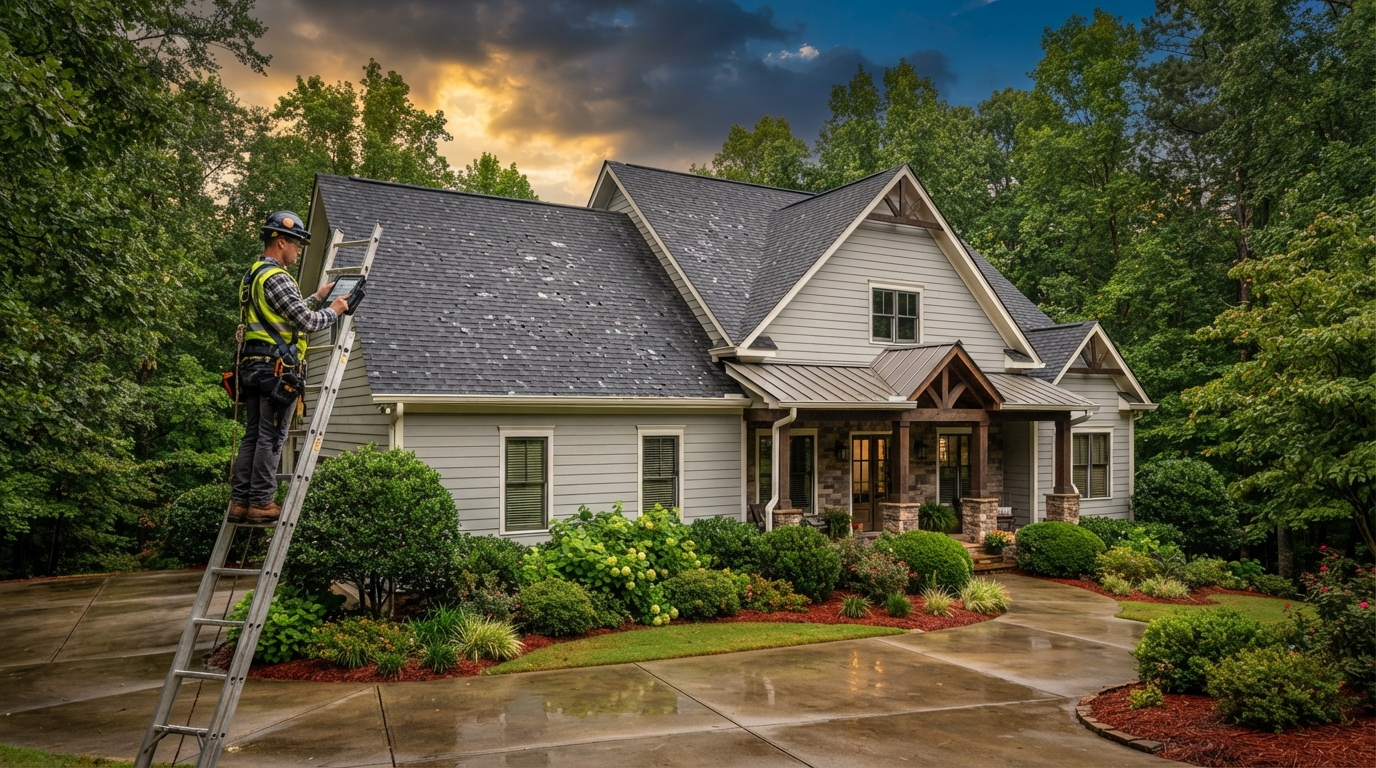
When a hailstorm rolls through Snellville, the damage it leaves behind can range from subtle granule loss to cracked and broken shingles that compromise your entire roof system. Understanding the Snellville GA hail damaged shingles insurance claim steps can mean the difference between a fully covered repair and thousands of dollars out of your own pocket. At GCR Construction & Roofing, we have spent 15 years of experience helping Gwinnett County homeowners navigate the insurance claim process with confidence. This guide walks you through each critical step, from identifying damage to securing a fair settlement, so you can protect your home and your investment.
Hail damage claims in Georgia follow specific timelines and procedures that many homeowners discover too late. Insurance companies have their own interests to protect, and without proper documentation and professional advocacy, legitimate claims can be underpaid or denied. Whether you live in Snellville, Lawrenceville, Lilburn, or any other community we serve across Gwinnett County, this comprehensive guide gives you the insider knowledge you need to maximize your rightful claim.
Before you can file a successful insurance claim, you need to understand what hail damage actually looks like on a shingle roof. Hail impacts affect asphalt shingles differently than they affect metal or other roofing materials, and the signs are not always obvious from the ground. Knowing what to look for helps you document damage thoroughly and communicate effectively with both your insurance company and roofing contractor.
Hail damage to asphalt shingles typically presents in several distinct forms. The most common is granule displacement, where the impact of hailstones knocks loose the protective granules that shield the asphalt layer from UV rays and weather. You may notice dark spots or patches where granules are missing, exposing the underlying asphalt. These areas will deteriorate faster than the rest of your roof if left unrepaired.
Bruised shingles show soft spots where the hail impact has compromised the shingle’s structural integrity. When you press on these areas, they feel spongy compared to undamaged sections. Cracked shingles display visible fractures that may not be apparent from the ground but become obvious during a close inspection. In severe storms, you may find shingles that are completely broken or torn away.
The size of hail matters significantly. Here is a quick reference for understanding hail size and potential damage:
| Hail Size | Common Comparison | Typical Shingle Damage | Insurance Claim Likelihood |
|---|---|---|---|
| 0.75 inch | Penny | Minor granule loss | Low unless widespread |
| 1 inch | Quarter | Moderate granule loss, bruising | Moderate |
| 1.25 inches | Half dollar | Significant bruising, cracking | High |
| 1.5 inches | Golf ball | Severe damage, potential penetration | Very high |
| 2 inches+ | Baseball or larger | Catastrophic damage, immediate leaks | Near certain |
Your roof shingles are not the only indicators of hail damage. Gutters, downspouts, and soft metal components often show damage more visibly than shingles. Walk around your home and inspect these areas:
These additional damage points strengthen your insurance claim by demonstrating the storm’s intensity. Insurance adjusters look for corroborating evidence beyond just roof damage, and documenting damage to multiple components of your property builds a stronger case.
Time is critical when documenting hail damage. The longer you wait, the more difficult it becomes to attribute damage specifically to a particular storm. Begin documentation as soon as it is safe to do so after the storm passes. Use your smartphone to capture both photos and video of all visible damage from multiple angles.
Include wide shots that show the overall roof and property, medium shots that show damaged sections in context, and close-up shots that capture specific damage details. Video walkthroughs provide helpful context that photos alone cannot convey. Make sure your phone’s date and time stamp feature is enabled so your documentation carries temporal proof.
SNELLVILLE HAIL DAMAGE INSURANCE CLAIM STEPS
GCR Construction has helped 500+ Gwinnett County homeowners navigate hail damage claims since 2009. Sources: Insurance Information Institute, NOAA Storm Events Database
Thorough documentation forms the foundation of a successful hail damage roof insurance claim in Georgia. Before you pick up the phone to call your insurance company, gather every piece of evidence that supports your claim. This preparation phase sets the tone for your entire claims experience and can significantly impact your final settlement.
Your photo documentation should tell a complete story of the damage your property sustained. Start from the street with photos showing your entire home and roof. Move closer to capture damage to siding, windows, and ground-level components. If you can safely access your roof or use a drone, capture overhead images showing the pattern and extent of shingle damage.
For each damaged area, take photos from at least three angles. Include a reference object like a coin or ruler in close-up shots to demonstrate the size of hail impacts or damaged areas. Photograph damage to landscaping, outdoor furniture, and vehicles as well. All of this evidence helps establish the storm’s severity and your property’s exposure.
Insurance companies require proof that a hail event actually occurred in your area on the date you claim. Gather official weather documentation from multiple sources:
Snellville and surrounding communities like Grayson, Loganville, and Sugar Hill frequently experience severe weather during spring and summer months. Having official weather documentation eliminates any question about whether a damaging storm actually occurred.
Beyond photos and weather reports, create a detailed written inventory of every damaged item and area you identify. This inventory serves as your master checklist throughout the claims process. Include the location of damage, description of the damage type, estimated measurements, and any relevant notes about pre-existing conditions versus storm damage.
Your written inventory should cover your roof, gutters, siding, windows, outdoor structures, landscaping, and any personal property damaged by the storm. Update this inventory as you discover additional damage or as professionals identify issues you may have missed.
Once your documentation is complete, file your insurance claim without delay. Georgia law and most insurance policies have specific timeframes for reporting damage, and waiting too long can jeopardize your claim. Prompt filing also demonstrates to your insurer that you are taking the damage seriously and handling matters responsibly.
Most insurance policies require prompt notification of damage, typically defined as within 72 hours of discovering the loss. While Georgia does not mandate a specific statutory deadline for filing hail damage claims, insurance companies can deny claims they deem unreasonably delayed. Filing within 24 to 72 hours protects your interests and starts the clock on your insurer’s response obligations.
When you call your insurance company, have your policy number ready along with your documentation. Provide a clear, factual description of the storm event and the damage you have identified. Avoid speculation about repair costs or coverage at this stage. Simply report the facts and request that a claim be opened.
For homeowners in Snellville, Dacula, Buford, and other Gwinnett County communities, major storms often generate high claim volumes. Filing quickly puts you earlier in the queue for adjuster assignments and speeds up your overall timeline.
Before your adjuster arrives, review your homeowners insurance policy thoroughly. Understand these key elements:
Many Georgia homeowners are surprised to learn they have a percentage-based wind and hail deductible rather than a flat amount. A two percent deductible on a home insured for $350,000 means you pay $7,000 out of pocket before coverage kicks in. Knowing this upfront helps you make informed decisions about whether to proceed with a claim.
When you file your claim, insist on receiving a claim number before ending the call. This number is your reference for all future communications. Also ask for a timeline on when an adjuster will be assigned and when you can expect their call to schedule an inspection.
Document the name of every person you speak with, the date and time of each conversation, and a summary of what was discussed. This communication log becomes invaluable if disputes arise later in the process. Georgia law requires insurers to acknowledge claims within 15 days and make claim decisions within reasonable timeframes, so knowing your timeline helps you hold your insurer accountable.
One of the most important steps in the Snellville GA hail damaged shingles insurance claim steps process is getting an independent professional inspection before your insurance adjuster visits. A qualified roofing contractor provides expertise that strengthens your claim and ensures no damage goes undetected.
Insurance adjusters are trained professionals, but they work for the insurance company. Their job is to assess damage accurately while also controlling costs for their employer. Having your own professional assessment provides a critical counterbalance and ensures your interests are represented.
At GCR Construction & Roofing, we provide thorough inspections that examine every component of your roofing system. We check not just your shingles, but also underlayment, decking, flashing, vents, gutters, and related components. Our inspectors know exactly what adjusters look for and what they sometimes miss.
Getting your inspection completed before the adjuster arrives gives you a complete picture of your damage. You walk into the adjuster meeting informed and prepared rather than relying solely on what the adjuster chooses to include in their report.
A professional roofing contractor provides you with a detailed written report documenting all identified damage. This report should include photographs, measurements, and a scope of work needed to properly repair your roof. It should also include an estimate for the repair or replacement cost.
Your contractor’s estimate serves as a benchmark against which you can compare the insurance adjuster’s findings. Significant discrepancies between the two estimates indicate potential issues that need resolution. Having a detailed professional report also supports any supplement requests or appeals you may need to file later.
We offer free roof inspections to homeowners throughout Gwinnett County, including Snellville, Duluth, Suwanee, Peachtree Corners, and Norcross. Schedule your free roof inspection to get the documentation you need before meeting with your adjuster.
Hail damage is not always visible from the ground or even from a casual rooftop inspection. Professional roofing contractors know where to look for hidden damage that homeowners and even some adjusters miss:
Hidden damage left unrepaired leads to premature roof failure and costly repairs down the road. A thorough professional inspection identifies these issues while they are still covered under your storm damage claim.
The adjuster inspection is the pivotal moment in your insurance claim. What the adjuster documents during this visit largely determines your settlement amount. Preparing properly and having the right support during this meeting can significantly impact your outcome.
You have every right to have your roofing contractor present when the insurance adjuster inspects your roof. This is not adversarial. It is simply ensuring that both parties can discuss findings openly and that nothing gets overlooked. Many adjusters actually appreciate having a knowledgeable contractor present because it facilitates clearer communication about damage.
Your contractor serves as your technical advocate during the inspection. They can point out damage the adjuster might miss, explain the significance of certain findings, and provide context about repair requirements. At GCR Construction & Roofing, we regularly attend adjuster meetings with our clients throughout Gwinnett County because we know how much it matters to the final outcome.
Never feel pressured to proceed with an adjuster inspection before your contractor can be present. You can request to reschedule if the timing does not work. A brief delay is far better than an incomplete inspection that shortchanges your claim.
If you are physically able and it is safe to do so, join the adjuster and your contractor on the roof. Walking the roof together ensures everyone sees the same damage and discusses it in real time. Your contractor can point out each area of damage identified during their inspection, and the adjuster can document everything thoroughly.
Bring your documentation with you during this inspection. Reference your photos, your written inventory, and your contractor’s report. Show the adjuster the corroborating damage you documented on gutters, siding, and other components. The more complete the picture you present, the stronger your claim becomes.
For homeowners who cannot safely access their roof, have your contractor serve as your representative during the rooftop portion of the inspection. They can communicate your documented findings and ensure comprehensive coverage of all damaged areas.
Do not treat the adjuster inspection as a passive experience. Ask questions throughout the process:
If the adjuster says something you do not understand, ask for clarification immediately. If they skip an area your contractor identified as damaged, politely request that they inspect it. Document the adjuster’s responses and any areas of disagreement. This information becomes important if you need to dispute the claim later.
After the adjuster completes their inspection, your insurance company will send a settlement offer. This document requires careful review before you accept or proceed. Understanding what you are being offered, and what you may be entitled to, helps you make informed decisions about your roof repair or replacement.
When your insurance settlement arrives, place it side by side with your contractor’s estimate. Compare line by line:
Discrepancies between the two estimates are common. Minor differences in pricing are normal, but significant gaps in scope indicate potential problems. If the adjuster’s estimate covers only partial roof repairs while your contractor recommends full replacement, that is a substantive disagreement that needs resolution.
Our team at GCR Construction & Roofing reviews insurance estimates with our clients to identify discrepancies and determine appropriate next steps. We have seen too many Snellville homeowners accept underpaid claims simply because they did not know they could push back.
One of the most confusing aspects of insurance settlements is depreciation. If you have a replacement cost value policy, your insurer pays to replace your damaged roof with new materials of like kind and quality. However, they typically withhold a portion of the payment, called depreciation, until repairs are completed.
Here is how it works: The insurance company calculates the full replacement cost, then deducts depreciation based on your roof’s age. They send you a check for the depreciated value minus your deductible. Once you complete repairs, they release the depreciation holdback, bringing your total payment up to full replacement cost.
If you have an actual cash value policy, you only receive the depreciated amount. There is no additional payment after repairs. Understanding which type of coverage you have helps you budget accurately for your repair project and avoid surprises.
If your insurance settlement falls short of what you believe is fair, you have options. Georgia homeowners can request re-inspection, file formal disputes, or invoke appraisal clauses in their policies. Here are your primary avenues for challenging an inadequate settlement:
Supplement requests allow your contractor to submit additional documentation for damage or repair costs the original adjuster missed. This is often the fastest way to increase an insufficient settlement. Your contractor prepares a detailed supplement package with photos, measurements, and cost justification.
Re-inspection requests bring a different adjuster back to your property for a fresh assessment. If you believe the original adjuster made errors or missed significant damage, a re-inspection can correct the record.
The appraisal process, available under most Georgia homeowners policies, provides a binding resolution when you and your insurer cannot agree on the damage amount. Each party hires an appraiser, and if the appraisers disagree, they select an umpire to make a final decision.
Working with an experienced local contractor gives you an advocate throughout this process. We know how Georgia insurance claims work, what adjusters look for, and how to document damage persuasively. Our roofing services include helping homeowners navigate the entire claims process from start to finish.
Georgia does not have a specific statute mandating a deadline for filing hail damage claims. However, your individual insurance policy contains provisions about timely reporting of losses. Most policies require you to report damage promptly, which insurance companies typically interpret as within 72 hours of discovering the damage. Beyond policy requirements, Georgia’s statute of limitations for property damage claims is generally six years, but waiting anywhere close to that long virtually guarantees claim denial. We strongly recommend filing within 24 to 72 hours of the storm to protect your rights and demonstrate good faith. Prompt filing also positions you earlier in the queue during busy storm seasons when adjusters are handling high claim volumes across Gwinnett County communities like Snellville, Berkeley Lake, and Braselton.
The ideal sequence is to document damage yourself immediately after the storm, file your insurance claim promptly, then schedule a professional roof inspection before the insurance adjuster visits. This timing gives you the documentation you need to file quickly while ensuring you have professional findings to compare against the adjuster’s assessment. At GCR Construction & Roofing, we can often provide inspections within 24 to 48 hours of your call, which typically allows time before your adjuster appointment. If you have not yet filed a claim and are unsure whether you have significant damage, getting a professional inspection first can help you make an informed decision about whether to proceed. We provide free inspections to homeowners throughout our service area, so there is no cost to you either way.
Disagreements between adjuster and contractor estimates happen frequently and do not mean your claim is denied. The first step is identifying specifically where the estimates differ. Is it a matter of scope, where the adjuster did not include all damaged areas? Is it pricing, where the adjuster used below-market rates for materials or labor? Or is it repair methodology, where the adjuster specified repairs that your contractor believes are inadequate? Once you identify the discrepancy, your contractor can prepare a supplement request with detailed documentation supporting the higher estimate. We submit supplements regularly on behalf of our clients and achieve successful increases in many cases. If the supplement process does not resolve the dispute, you can request re-inspection or invoke your policy’s appraisal clause. Do not simply accept a lowball offer without exploring your options.
Whether your insurance covers full roof replacement depends on the extent of damage, your policy terms, and your coverage type. If hail damage is widespread across your roof rather than isolated to one area, full replacement is often the appropriate repair method and should be covered. However, if damage is limited to a small section, insurers may only approve partial repairs. Your policy type matters too. Replacement cost value policies pay to replace your roof with new materials of like kind and quality, while actual cash value policies only pay the depreciated value based on your roof’s age. Some older policies or policies on homes with aging roofs may have limitations or exclusions that affect coverage. Having your contractor present during the adjuster inspection helps ensure all damage is documented and the appropriate repair scope is approved. We advocate for full replacement when the damage warrants it and can explain the insurance company’s obligations under your specific policy.
Filing a hail damage insurance claim can feel overwhelming, especially when you are dealing with a damaged home and unfamiliar insurance procedures at the same time. But you do not have to navigate this process alone. GCR Construction & Roofing has spent 15 years helping homeowners across Gwinnett County secure fair settlements for legitimate storm damage claims.
From Snellville to Suwanee, Lilburn to Loganville, and every community in between, we bring the same commitment to quality craftsmanship and honest service that has built our reputation throughout the region. When hail damages your shingle roof, we inspect the damage thoroughly, document it professionally, and advocate for you throughout the claims process.
Our services extend beyond claims assistance. We handle complete shingle roofing installations and repairs, metal roofing for homeowners seeking superior hail resistance, gutter systems to protect your home from water damage, siding replacement, and TPO roofing for commercial properties. Whatever your roofing needs, we deliver the quality workmanship Gwinnett County homeowners have trusted since 2010.
If your Snellville home has been hit by hail, take action now. Contact us for a free roof inspection and get the professional documentation you need for a successful insurance claim. Call us today at (470) 913-7148 or email support@gcrcontracting.com to schedule your appointment. Our team is ready to help you protect your home and maximize your legitimate claim.
Your Roof. Our Passion.