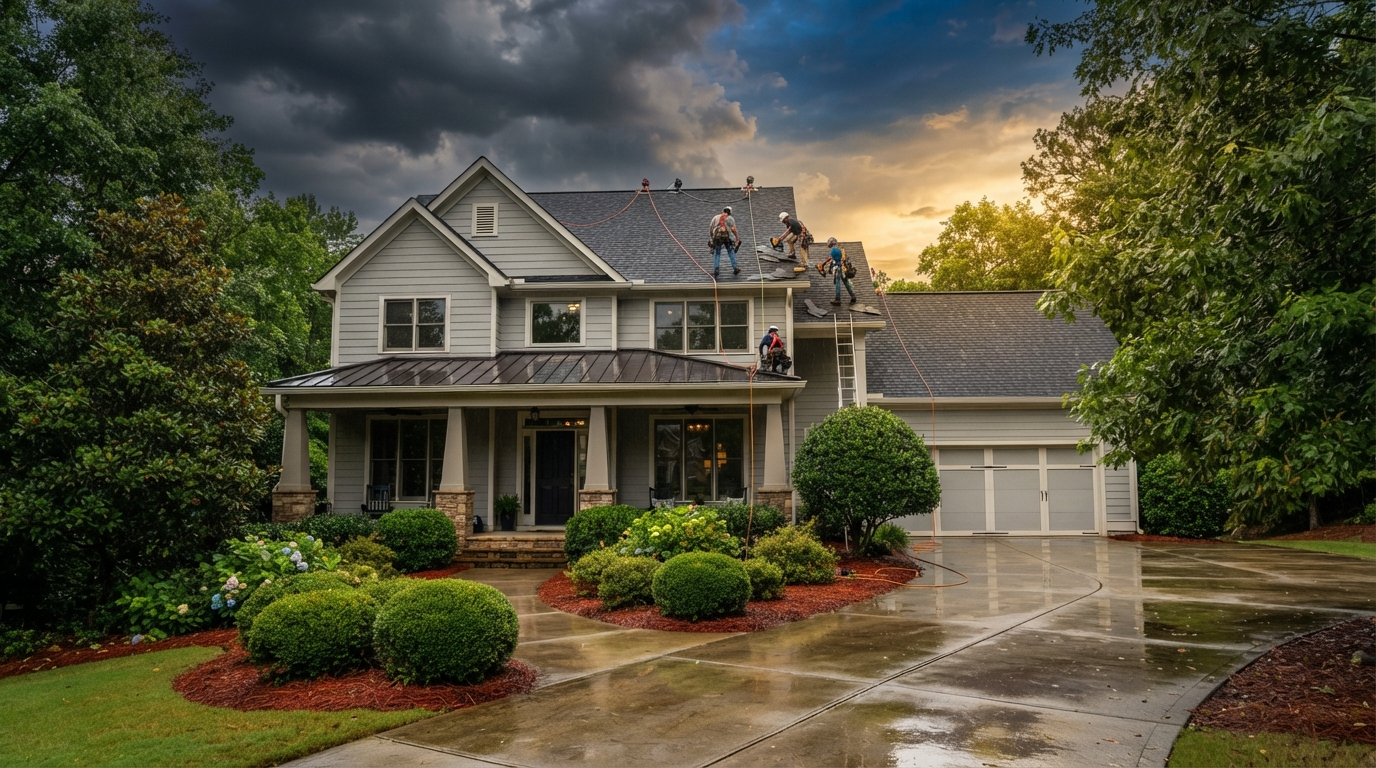
Every year, homeowners across Gwinnett County face the same critical decision: proactively address their roof or wait and hope it survives another storm season. If you are considering Norcross GA shingle roof replacement before hurricane season, you are already thinking ahead of most of your neighbors. Georgia’s hurricane season brings unpredictable weather patterns that test every component of your home’s exterior, and your roof serves as the primary defense against wind-driven rain and flying debris, as well as pressure changes that can tear through compromised roofing materials. At GCR Construction & Roofing, we have spent 15 years helping families throughout Norcross and the surrounding communities prepare their homes for whatever Mother Nature delivers. Homeowners who replace aging or damaged roofs before June consistently avoid the stress and expense, and prevent the property damage that plague those who wait until storm warnings fill their phones.
This guide will walk you through everything you need to know about hurricane season roof preparation in Norcross, from assessment timelines to shingle ratings to insurance considerations. Whether you live in Peachtree Corners, Duluth, or anywhere else in our service area, the information here applies to your situation. Taking control now means avoiding the scramble later.
Georgia’s official hurricane season runs from June 1 through November 30, giving residents a six-month window of increased storm risk. While Norcross sits about 350 miles inland from the Atlantic coast, this distance provides less protection than many homeowners assume. Tropical storm remnants regularly push through Gwinnett County, bringing sustained winds, heavy rainfall, and conditions that expose every weakness in your roofing system.
When hurricanes make landfall along the Georgia or Carolina coasts, they weaken but do not disappear. These systems often maintain tropical storm-force winds well into their movement inland, and Gwinnett County has experienced significant damage from storms that made landfall hundreds of miles away. Hurricane Michael in 2018 and Hurricane Irma in 2017 both caused substantial property damage across metro Atlanta suburbs, including communities like Lawrenceville, Snellville, and Suwanee.
The combination of wind and rain during these events creates problems that neither element would cause alone. Wind lifts shingle edges and breaks seals, while rain immediately exploits these new entry points. A roof that seemed adequate during normal weather conditions can fail catastrophically when subjected to sustained 50 mph winds with horizontal rain.
Shingles installed more than 15 years ago were manufactured under different standards than today’s products. Even if they appear functional during routine inspections, the adhesive strips that bond shingles together degrade with age and sun exposure. When high winds catch the edge of a compromised shingle, that shingle becomes a projectile that can damage other homes, vehicles, or people.
Beyond the immediate loss of roofing material, exposed underlayment and decking absorb water rapidly during storm conditions. What begins as a single missing shingle can become extensive water damage to insulation, drywall, electrical systems, or personal property within hours. Homeowners in Dacula and Grayson have experienced this progression during recent storm seasons.
The structural implications extend beyond water damage. When multiple shingles lift or detach, the remaining roof covering faces increased wind load. This creates a cascading failure pattern where each lost shingle increases the likelihood of losing additional shingles. Storm-ready roofing in Gwinnett County requires materials and installation methods specifically designed to resist this failure cascade.
WHY NORCROSS HOMEOWNERS REPLACE SHINGLES BEFORE HURRICANE SEASON
Sources: NOAA, Insurance Information Institute, HomeAdvisor 2024 Georgia Market Data
A comprehensive pre-hurricane roof inspection in GA evaluates different criteria than standard maintenance inspections. While general inspections focus on current leaks and visible damage, storm preparation assessments evaluate how your roof will perform under extreme conditions. Understanding these evaluation points helps you communicate effectively with roofing professionals and make informed decisions about replacement versus repair.
Professional inspectors examine several areas that homeowners cannot safely or effectively evaluate from the ground:
Wind uplift occurs when high-speed air flowing over a roof creates negative pressure, essentially trying to lift the roof covering off the decking. This pressure increases dramatically at roof edges and corners, where wind accelerates as it changes direction. Shingle manufacturers rate their products for wind resistance, typically expressed as a wind speed the product can withstand when properly installed.
Standard three-tab shingles typically carry wind ratings between 60 and 70 mph. Architectural shingles often achieve ratings between 110 and 130 mph. Some specialty products reach 150 mph ratings, though these require specific installation techniques to achieve their rated performance.
For homeowners in Norcross and throughout Gwinnett County, we generally recommend shingles rated for at least 110 mph winds. This rating provides adequate protection for the tropical storm remnants and severe thunderstorms common in our area while remaining cost-effective for most budgets.
Homeowners can safely observe certain warning signs from the ground or through attic inspection:
However, the critical factors determining storm performance often require professional evaluation. If your roof is approaching 15 years of age, has sustained previous storm damage, or shows any of the warning signs above, a professional assessment provides the information you need to make an informed decision. At GCR Construction & Roofing, we offer free pre-hurricane inspections to homeowners throughout our service area, including Berkeley Lake, Braselton, Buford, and all Gwinnett County communities.
Timing your roof replacement correctly makes the difference between a stress-free project and a rushed installation that may not receive proper attention. Understanding the seasonal patterns in our industry helps you plan effectively and secure the best possible service.
For homeowners wanting their new roof installed before hurricane season officially begins June 1, we recommend initiating the replacement process no later than late April. This timeline allows for:
Starting this process in April provides adequate buffer time for weather delays, material availability issues, or unexpected findings during removal of the old roof. Homeowners who contact us in May can often still complete their project before June, but the timeline becomes tighter and options become more limited.
Roofing contractor schedules follow predictable seasonal patterns in Georgia. Winter months (December through February) see reduced activity due to weather limitations and holiday schedules. Early spring (March and April) represents the ideal window, with moderate weather, available crews, and minimal emergency work competing for attention.
Once May arrives, two factors compress availability simultaneously. First, proactive homeowners begin scheduling storm preparation work. Second, spring storms create emergency repair demand that pulls crews away from scheduled projects. By June, most reputable contractors operate with backlogs measured in weeks rather than days.
When a named storm threatens Georgia later in the season, emergency demand can extend lead times to months. Homeowners who waited find themselves competing for limited contractor availability with everyone else who delayed their decision. This scenario played out across Sugar Hill and Lilburn during recent storm seasons, with some homeowners waiting six weeks or more for basic repairs.
Proper shingle installation requires specific weather conditions. Most manufacturers specify minimum temperatures of 40-45°F for installation, as the adhesive strips require warmth to bond correctly. Additionally, shingles should not be installed on wet decking, and rain forecasts within 24 hours of installation create scheduling challenges.
Georgia’s spring weather generally provides adequate installation windows, but thunderstorm patterns can interrupt schedules. A project planned for three consecutive days might extend to five or six days when afternoon storms force crews to stop work and secure materials. This variability reinforces the importance of beginning the process early enough to accommodate delays.
At GCR Construction & Roofing, we monitor weather forecasts closely and communicate proactively with homeowners about scheduling adjustments. Our roofing services include coordination to minimize the time your home remains vulnerable during the replacement process.
Not all shingles provide equal protection during severe weather. Understanding the rating systems and product options available helps you select materials appropriate for your risk level and budget, as well as your aesthetic preferences.
Shingles receive two primary ratings relevant to storm performance: impact resistance and wind resistance. These ratings use different scales and measure different properties.
Impact Resistance (UL 2218): This test drops steel balls of increasing size onto shingle samples. Class 1 through Class 4 ratings indicate the largest ball size the shingle withstands without cracking or breaking. Class 4 represents the highest rating, indicating resistance to impacts from 2-inch diameter steel balls dropped from 20 feet.
Wind Resistance (ASTM D3161 and D7158): These tests subject shingles to controlled wind speeds and evaluate adhesion and tear resistance. Class A indicates testing at 60 mph, Class D at 90 mph, Class F at 110 mph, and Class H at 150 mph.
| Shingle Type | Typical Wind Rating | Impact Rating | Best For | Approximate Cost Increase vs. Basic |
|---|---|---|---|---|
| 3-Tab Standard | 60-70 mph (Class A) | Class 1-2 | Budget-conscious, low-risk areas | Baseline |
| Architectural Standard | 110-130 mph (Class F) | Class 2-3 | Most Gwinnett County homes | 15-25% |
| Architectural Premium | 130 mph (Class F) | Class 3-4 | Enhanced protection, curb appeal | 30-50% |
| Impact Resistant | 110-130 mph (Class F-H) | Class 4 | Hail-prone areas, potential insurance savings | 40-60% |
| Hurricane-Rated | 150+ mph (Class H) | Class 4 | Maximum protection, coastal proximity | 60-100% |
Major manufacturers including GAF, CertainTeed, and Owens Corning all offer product lines specifically engineered for hurricane resistance. These products combine enhanced adhesive formulations with modified installation requirements and reinforced construction to achieve their ratings.
GAF Timberline HDZ: This architectural shingle features the StrikeZone nailing area with a double-adhesive layer, achieving 130 mph wind ratings with standard installation. The LayerLock technology creates mechanical bonds between shingle layers, reducing edge lift during high winds.
CertainTeed Landmark PRO: CertainTeed’s premium architectural line uses NailTrak technology to ensure proper nail placement, critical for achieving rated wind performance. The SureNail strip provides enhanced tear resistance at the nail line, the most common failure point during wind events.
Owens Corning Duration STORM: This product features the SureNail Technology strip and achieves 130 mph wind ratings. The WeatherGuard Technology provides enhanced protection in the nail zone where most wind damage initiates.
During your consultation, we discuss which product lines best match your priorities. Each manufacturer offers warranty programs, and proper installation is essential to maintaining warranty coverage and achieving rated performance.
Even the best shingles underperform when installed incorrectly. Storm-rated installation includes several practices beyond standard methods:
Our crews at GCR Construction & Roofing receive training on manufacturer-specified high-wind installation methods. With 15 years of experience protecting Gwinnett County homes, we understand how to maximize the storm resistance of every roof we install.
Your homeowners insurance policy interacts with roof replacement decisions in several important ways. Understanding these relationships before beginning your project helps you maximize benefits and avoid surprises.
Insurance companies base premiums partly on the age and condition of your roof. Many insurers offer premium reductions for newer roofs, with the most significant reductions applying during the first 10 years after installation. Some Georgia insurers also provide additional savings for impact-resistant shingles rated Class 3 or Class 4.
The specific savings available varies by insurer and policy type. Before finalizing your material selection, contact your insurance agent to ask about:
In many cases, the insurance savings over a 15-20 year roof lifespan partially offset the premium paid for higher-rated materials. This calculation changes the cost-benefit analysis for many homeowners considering their options.
Proper documentation protects you if future claims become necessary. Before installation begins, document your existing roof’s condition through:
After installation, retain all documentation provided by your contractor:
These records establish the age, materials, and condition of your new roof if you need to file a future claim. They also support any requests for insurance premium adjustments based on the new installation.
Insurance policies typically cover sudden, accidental damage from named storms. However, coverage can become complicated when storms damage roofs already in poor condition. Insurers may attribute damage to pre-existing deterioration rather than the storm event, reducing or denying claim payments.
This situation creates particular problems when:
Proactive replacement eliminates this coverage ambiguity. A properly installed, documented new roof provides clear grounds for claim coverage if storm damage occurs. The difference between a fully covered claim and a disputed claim often exceeds the cost difference between repair and replacement.
Preparing your roof for hurricane season requires expertise, quality materials, and reliable execution. At GCR Construction & Roofing, we have provided these elements to homeowners throughout Gwinnett County for 15 years. Our approach combines thorough assessment with honest recommendations and skilled installation to deliver roofs that perform when storms arrive.
We offer complimentary roof inspections to homeowners throughout our service area. These assessments evaluate your current roof’s storm readiness and provide clear information about your options. Whether you need minor repairs to extend your roof’s service life or complete Norcross emergency roof replacement before the season begins, our inspection gives you the facts needed to decide.
During your inspection, our technician evaluates:
You receive a written assessment with photographs and our recommendations. There is no obligation to proceed with any work, and no pressure tactics. We believe homeowners make better decisions with better information, and that philosophy has built our reputation over 15 years in this community.
Since opening our doors, we have installed and repaired roofs across every community in Gwinnett County. We have worked through major storm events such as Hurricane Irma, Hurricane Michael, and numerous severe thunderstorms that tested roofing systems throughout the region. This experience informs every recommendation we make and every installation technique we employ.
Our crews live in the communities we serve. Many of our team members have homes in Norcross, Rest Haven, Auburn, and other nearby areas. When storms threaten, their families face the same concerns yours does. This personal connection motivates the quality craftsmanship and honest service that define our company.
Beyond shingle roofing, we offer complete exterior services including metal roofing, gutters, siding, and TPO roofing for flat or low-slope applications. This comprehensive capability means one trusted contractor can address all your storm preparation needs.
For homeowners who contact us in the coming weeks, we offer expedited scheduling to complete installations before June 1. Depending on material availability and project scope, we can often begin work within 7-10 days of contract signing. This fast-track option prioritizes homeowners committed to pre-season installation and helps ensure your home has protection before the first tropical system threatens.
To schedule your free pre-hurricane roof inspection, call us at (470) 913-7148 or email support@gcrcontracting.com. Our staff will coordinate a convenient inspection time and answer any initial questions about the process.
For optimal timing, begin the replacement process by late April to ensure installation completion before June 1, when Georgia’s hurricane season officially starts. This timeline accounts for inspection, material ordering, permit acquisition if needed, and scheduling. Starting earlier provides more flexibility if weather delays or material availability issues arise. Homeowners who wait until May can often still complete projects before hurricane season, but options become more limited and schedules tighter. Waiting until a storm threatens is too late for replacement, as contractors become overwhelmed with emergency repairs and material suppliers face unprecedented demand.
For most Gwinnett County homes, we recommend architectural shingles rated for at least 110-130 mph winds, which corresponds to Class F under ASTM D7158 testing standards. This rating provides strong protection against the tropical storm remnants and severe thunderstorms common in our area. Homeowners seeking maximum protection should consider Class H rated products achieving 150 mph resistance, though these carry higher costs. Additionally, Class 4 impact-resistant shingles provide protection against hail damage and may qualify for reduced insurance premiums. During your free inspection, we discuss which rating level best matches your priorities, risk tolerance, and budget.
Yes, pre-storm roof replacement typically affects your insurance in several positive ways. Many insurers offer premium reductions for newer roofs, with the most significant reductions applying to roofs less than 10 years old. Some policies provide additional savings for impact-resistant shingles rated Class 3 or Class 4. Perhaps more importantly, a new, properly documented roof eliminates potential claim disputes related to pre-existing damage or deferred maintenance. When storm damage does occur, claims on new roofs typically process more smoothly than claims involving aging or previously damaged roofing. Contact your insurance agent before finalizing material selection to understand specific savings available under your policy.
Most residential roof replacements in the Norcross area require 1-3 days for the actual installation work, depending on the roof’s size and complexity, and local weather conditions. However, the complete process from initial contact to finished installation typically spans 2-4 weeks. This timeline includes initial inspection (1-2 days), material selection and ordering (3-7 days for standard products, longer for specialty items), permit acquisition where required, and scheduling coordination. During peak demand periods approaching hurricane season, scheduling delays can extend timelines further. Homeowners seeking pre-hurricane installation should initiate the process as early as possible to ensure adequate time for each phase.
The window for proactive roof replacement narrows each week as hurricane season approaches. Homeowners in Norcross, Peachtree Corners, Duluth, Suwanee, and across Gwinnett County have a choice: take control of their home’s protection now, or wait and hope. At GCR Construction & Roofing, we have spent 15 years helping families make the smart decision before storms force their hand.
Our team is ready to assess your roof’s hurricane readiness and provide honest recommendations based on what we find. Whether you need targeted repairs, complete shingle replacement, or want to explore metal roofing or other options for superior storm protection, we deliver the quality craftsmanship and straightforward communication you deserve.
Call us today at (470) 913-7148 or email support@gcrcontracting.com to schedule your free pre-hurricane roof inspection. You can also visit our office at 6090 Dawson Blvd, Ste I, Norcross, GA 30093, or contact us online to request your appointment. Do not wait until storm warnings fill your phone to discover your roof needs attention.
Your Roof. Our Passion.