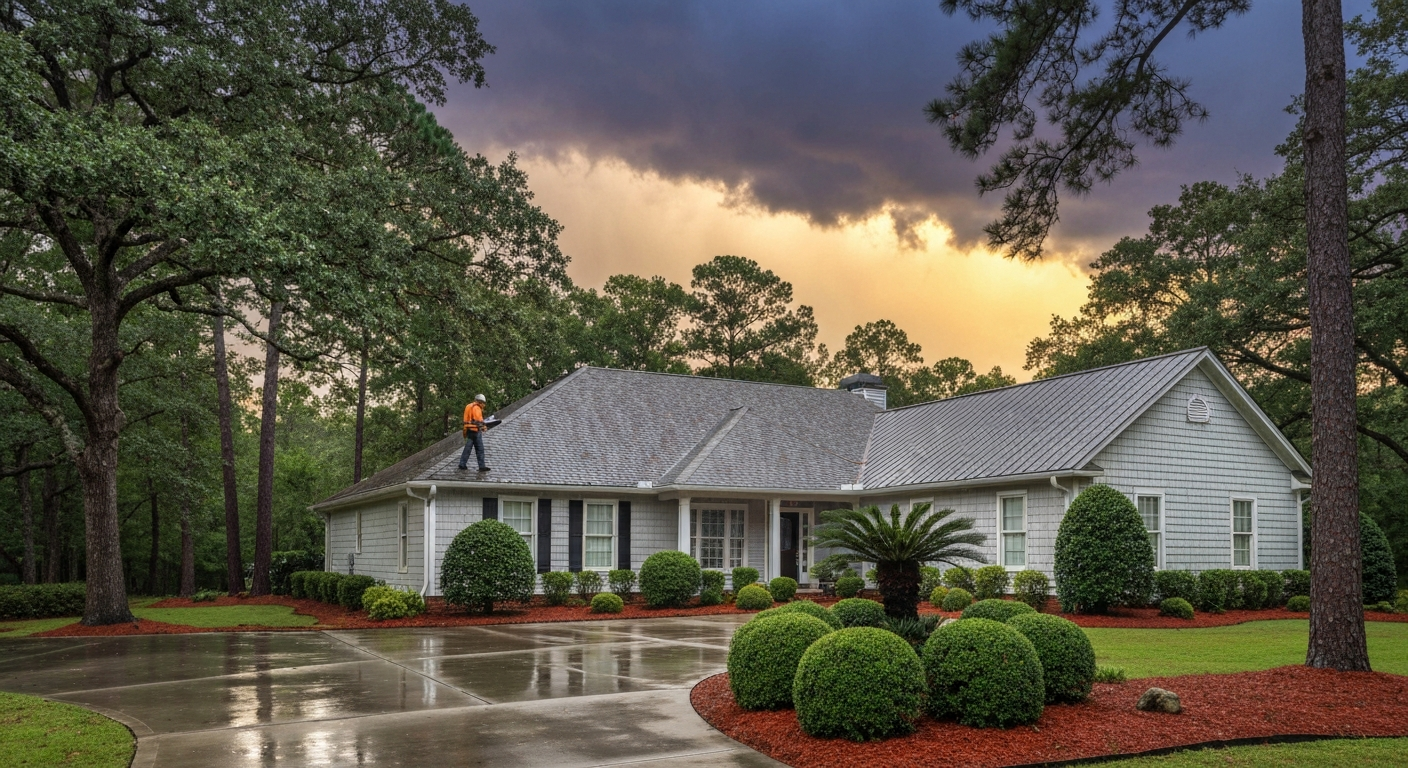
Every year, Georgia homeowners face a critical window of opportunity. The months before storm season arrives offer a chance to identify roof vulnerabilities and address them before severe weather turns minor issues into major disasters. For Grayson GA homeowners, scheduling an asphalt shingle roof inspection before storm season is not just smart maintenance—it is financial protection for your most valuable investment. With unpredictable weather patterns becoming more common across Gwinnett County, proactive roof assessment has shifted from optional to essential.
At GCR Construction & Roofing, we have spent 15 years of experience helping homeowners throughout Grayson, Lawrenceville, Snellville, and surrounding communities prepare their roofs for whatever Georgia weather delivers. We understand the unique challenges that our local climate presents, and we have seen firsthand how a simple pre-storm inspection can save homeowners thousands of dollars in preventable damage. This guide will walk you through everything you need to know about protecting your home before storm season arrives.
Grayson sits in a region where weather patterns can shift dramatically within hours. Georgia’s storm season typically runs from March through November, with peak severe weather activity occurring between April and September. During this extended window, homeowners face threats ranging from intense thunderstorms and damaging hail to the occasional tropical system that pushes inland from the coast.
The Gwinnett County area experiences an average of 50 to 60 thunderstorm days per year. Many of these storms bring high winds, heavy rainfall, and hail that can compromise asphalt shingle roofs. Unlike some regions where storm damage is obvious and immediate, Georgia’s humidity and temperature fluctuations often cause gradual deterioration that weakens roofing materials over time. By the time storm season arrives, a roof that appeared fine six months ago may have developed vulnerabilities that are invisible from ground level.
Homeowners in Grayson and neighboring communities like Loganville, Dacula, and Snellville face additional challenges from the local microclimate. The rolling terrain and tree coverage that make this area so attractive also create conditions where wind patterns can be unpredictable. A storm passing through might cause significant damage on one street while leaving homes just a mile away untouched. This variability makes pre-storm roof assessment even more important—you cannot assume your roof is safe simply because your neighbor’s roof survived the last storm.
One of the most costly misconceptions homeowners hold is that small roof issues can wait until they become noticeable problems. A few missing granules on your shingles, a slightly lifted edge, or a hairline crack in flashing sealant might seem insignificant during normal weather. However, these minor vulnerabilities act as entry points when severe weather arrives.
Consider what happens when a thunderstorm with 60 mph wind gusts moves through Grayson. That slightly lifted shingle edge that you have been ignoring suddenly catches the wind like a sail. The adhesive bond that was already weakened fails completely, and the shingle tears away—often taking neighboring shingles with it. What started as a five-dollar repair becomes a section of exposed decking that allows water infiltration. By the time the storm passes, you are dealing with roof deck damage, attic moisture problems, and potential mold growth.
The financial case for pre-storm roof inspection is straightforward. A professional inspection identifies problems when they are still minor and relatively inexpensive to fix. Emergency repairs after storm damage cost significantly more for several reasons:
Homeowners who invest in regular pre-storm inspections through our roofing services typically spend a fraction of what reactive homeowners pay over time. The inspection itself often costs nothing—GCR Construction & Roofing offers free roof inspections throughout Gwinnett County—and the repairs identified are usually minor when caught early.
WHY PRE-STORM ROOF INSPECTIONS MATTER IN GRAYSON, GA
Sources: NOAA Climate Data, Insurance Information Institute, NRCA Industry Reports | Schedule your Grayson GA asphalt shingle roof inspection before storm season with GCR Construction & Roofing
A thorough pre-storm roof inspection goes far beyond a quick visual scan. Professional inspectors evaluate dozens of components and conditions that affect how your roof will perform under stress. Understanding what inspectors look for helps you appreciate the value of professional assessment and recognize potential issues you might observe from the ground.
Asphalt shingles degrade in predictable ways, and each type of degradation creates specific vulnerabilities during storms. Professional inspectors examine shingles systematically across your entire roof surface, documenting conditions that indicate current problems or future failures.
Curling occurs when shingles lose moisture content unevenly or when adhesive bonds fail. Cupped shingles—where edges lift upward—are particularly vulnerable to wind damage because they create surfaces that catch wind uplift. Clawed shingles, where the center lifts while edges remain flat, indicate advanced aging and brittleness. Both conditions significantly increase the likelihood of shingle loss during high winds.
Cracking typically results from thermal cycling—the expansion and contraction that occurs as Georgia temperatures swing between hot days and cool nights. Cracked shingles cannot shed water effectively, and the cracks will widen under storm stress. Inspectors also check for blistering, which occurs when moisture trapped within shingles causes the surface to bubble and eventually rupture.
Granule loss is often the first visible sign of shingle aging. Those small, sand-like particles on your shingles protect the underlying asphalt from UV degradation. When granules wash away—you might notice them accumulating in your gutters—the shingles become vulnerable to accelerated deterioration. Bare spots on shingles absorb more heat and age faster, creating weak points that fail first during severe weather.
Roof penetrations—areas where pipes, vents, chimneys, or skylights break through the roof surface—are inherently vulnerable to water infiltration. These areas rely on flashing and sealants to redirect water around the penetration and maintain the roof’s water barrier. Professional inspectors pay particular attention to these critical points.
Metal flashing around chimneys, dormers, and roof-to-wall transitions can corrode, separate, or lift over time. Inspectors check for gaps between flashing and adjacent surfaces, rust or corrosion on metal components, and failed fasteners that allow movement during wind events. Improperly secured flashing often fails during storms, creating immediate leak points even on otherwise sound roofs.
Pipe boots and vent covers deteriorate faster than surrounding shingles because they experience direct sun exposure and repeated thermal stress. The rubber or neoprene components of pipe boots become brittle and crack, allowing water to enter around plumbing penetrations. Ridge vents and attic ventilation components must be securely fastened and properly sealed to prevent wind-driven rain infiltration.
While shingles provide the visible weather barrier, the structural components beneath them determine your roof’s overall integrity. Professional inspectors evaluate decking condition, looking for signs of rot, delamination, or sagging that indicate water damage or structural failure.
From inside the attic space, inspectors check for daylight penetration, water stains, and damaged or displaced insulation that might indicate active leaks. They assess rafter and truss condition, particularly at points where roof geometry creates stress concentrations. Proper attic ventilation is also evaluated, as inadequate ventilation accelerates shingle aging and can contribute to ice damming in winter months.
Inspectors document the condition of fascia and soffit boards, which support gutter systems and protect the roof edge from weather infiltration. Damaged or rotted fascia cannot adequately secure gutters, increasing the likelihood of gutter failure during heavy rain events.
Certain roof conditions that seem minor during normal weather become serious problems when storms arrive. Understanding these vulnerabilities helps homeowners prioritize inspection and repairs before severe weather season begins.
Asphalt shingles rely on two mechanisms to stay in place: nail fastening and adhesive bonding. When shingles are properly installed, a strip of adhesive along the lower edge bonds each shingle to the one below it, creating a sealed surface that resists wind uplift. Over time, this adhesive can fail due to age, thermal cycling, or inadequate initial bonding.
Shingles that have lost their adhesive bond may lie flat and appear intact from the ground, but they are ready to peel away when sustained winds arrive. Professional inspectors can identify these loose shingles by carefully lifting edges to test bond integrity—something homeowners should never attempt on their own due to safety risks and potential warranty implications.
Wind uplift follows predictable patterns on residential roofs. Edges, ridges, and corners experience the highest wind pressures and are most likely to fail first. A row of failed shingles along a roof edge often progresses across the roof as each subsequent shingle loses the support of its neighbor. What begins as a small vulnerability can rapidly escalate to widespread damage during a single wind event.
Every roof penetration—every pipe, vent, chimney, and skylight—represents a potential failure point. These penetrations rely on sealants and specialized flashing to maintain water integrity. Over years of UV exposure and thermal cycling, sealants dry out, shrink, and crack. The gaps that develop might be invisible during normal rainfall but allow significant water intrusion during wind-driven storms.
Chimney flashing deserves particular attention in pre-storm inspections. The junction between a chimney and roof surface involves multiple flashing pieces working together to redirect water flow. When any component fails—step flashing along the sides, counter flashing embedded in mortar joints, or saddle flashing behind the chimney—water finds its way into the home. Storm-driven rain can force water uphill and into gaps that would never leak during gentle rainfall.
Gutters play a critical role in managing water flow during storms. When gutters clog with leaves, debris, or accumulated sediment, water backs up at the roof edge instead of flowing safely away from your home. This backup creates several problems during heavy rainfall:
Pre-storm inspection includes evaluation of gutter condition and proper water flow. At GCR Construction & Roofing, we offer comprehensive gutter services alongside our roofing work, ensuring that your entire water management system is prepared for storm season.
Timing your roof inspection strategically maximizes the value of the assessment and ensures you have adequate time to address any issues before severe weather arrives. For Grayson GA homeowners, several key windows offer optimal inspection opportunities.
February and March represent the ideal window for pre-storm roof inspections in Gwinnett County. Winter weather has passed, allowing inspectors to safely access your roof and identify any damage from ice, snow, or winter storms. At the same time, Georgia’s most severe storm season—typically April through June—has not yet begun, providing time for necessary repairs.
Scheduling inspections early in spring also beats the seasonal rush. As storm season approaches, roofing contractors throughout Grayson, Lawrenceville, Lilburn, and surrounding areas experience increased demand. Homeowners who wait until April or May may face longer wait times for both inspections and repairs. By scheduling in late winter or early spring, you secure priority attention and ensure any needed work is completed before peak storm activity.
While spring inspections prepare your roof for summer storms, fall inspections address different concerns. October and November offer an opportunity to assess how your roof weathered the summer storm season and prepare for winter conditions. This inspection can identify damage from summer storms that might not be immediately apparent, such as loosened shingles or compromised flashing.
Fall inspections are particularly valuable for homes surrounded by mature trees. Leaf accumulation in gutters and on roof surfaces creates problems that compound over winter. Debris that traps moisture against shingles accelerates deterioration. Clogged gutters cannot handle winter rain or snowmelt, leading to ice dams and water backup.
Beyond scheduled seasonal inspections, homeowners should arrange professional assessments after significant weather events. Major hailstorms, straight-line wind events, and tropical weather all warrant post-event inspection, even if no damage is immediately visible from the ground.
Hail damage is particularly deceptive. Impact marks on shingles may not be visible from ground level, but the damage compromises shingle integrity and shortens roof lifespan. Insurance claims for hail damage have specific filing windows, making prompt professional documentation essential. Our team provides detailed inspection reports that support insurance claims when storm damage occurs.
Homeowners naturally wonder whether they can assess their own roofs before storm season. While certain observations can and should be made from ground level, professional inspection offers capabilities and benefits that DIY assessment cannot match.
Without climbing onto your roof—which we strongly discourage for safety and warranty reasons—you can observe several important conditions:
These ground-level observations can alert you to obvious problems, but they represent only a fraction of what professional inspection reveals. Many critical roof conditions are simply not visible without direct roof access and trained assessment.
Professional roof inspectors bring training, experience, and systematic methodology that identifies problems beyond what untrained observation reveals. Our inspectors at GCR Construction & Roofing evaluate your roof using standardized protocols that ensure no component is overlooked.
Inspectors can safely access your roof surface to test shingle adhesion, examine flashing installations at close range, and identify subtle conditions that indicate developing problems. They understand how different damage patterns relate to specific causes—distinguishing hail damage from blistering, for example, or identifying wind damage patterns that suggest installation defects.
Professional inspectors also provide objective assessment. As homeowners, we naturally want to believe our roofs are in good condition. Professional inspectors document actual conditions without the bias of ownership, providing honest evaluation that supports informed decision-making.
Perhaps the most valuable benefit of professional pre-storm inspection is documentation. When storms do cause damage, insurance claims require evidence of what damage the storm caused versus what conditions existed before. Without pre-storm documentation, adjusters may attribute existing wear to storm damage—or conversely, may claim that storm damage was actually pre-existing wear.
Professional inspection reports establish baseline roof condition with dated photographs and written assessment. This documentation proves invaluable during claims processes. Our inspection reports include:
| Documentation Element | Insurance Value |
|---|---|
| Dated photographs of roof condition | Proves pre-storm condition for comparison |
| Written assessment of shingle condition | Establishes baseline for damage evaluation |
| Flashing and penetration documentation | Identifies pre-existing vs. storm-caused issues |
| Professional inspector credentials | Provides credible third-party documentation |
| Recommended repairs list | Shows proactive maintenance history |
| Structural assessment notes | Documents hidden conditions before storms |
Homeowners with documented pre-storm inspections navigate insurance claims more smoothly and typically receive fairer settlements. The investment in professional inspection pays dividends when storm damage does occur.
Pre-storm inspection is the foundation of storm preparedness, but comprehensive preparation involves additional steps that protect your home and family.
An inspection only provides value when findings are acted upon. Once you receive your inspection report, prioritize identified issues based on severity and storm vulnerability. Some conditions require immediate attention, while others can be monitored and addressed on a longer timeline.
Critical pre-storm priorities typically include:
For shingle roofing repairs, metal roofing installation, gutter replacement, or siding work, our team provides detailed estimates and efficient scheduling to complete necessary work before storm season arrives. We serve homeowners throughout Gwinnett County, from Berkeley Lake and Peachtree Corners to Buford and Braselton.
Establishing a relationship with a trusted roofing contractor before emergencies occur offers significant advantages. When storms damage your roof, you need responsive professional attention—not a frantic search for available contractors while water enters your home.
Homeowners who have worked with us previously receive priority scheduling for storm damage assessment and repairs. We maintain emergency response capabilities throughout storm season, but demand inevitably surges after major weather events. Established customers benefit from our commitment to their ongoing service.
Beyond roofing, storm preparedness involves evaluating your home’s overall vulnerability. Siding condition affects how your home handles wind-driven rain. Window and door seals impact water infiltration during storms. TPO roofing and other flat roof systems on additions or outbuildings require specific attention. Comprehensive property assessment identifies all storm vulnerabilities, not just roofing concerns.
Storm preparedness extends to insurance coverage. Before storm season, review your homeowner’s policy to understand:
Many homeowners discover coverage gaps only when filing claims. Understanding your policy before storms occur allows you to address coverage concerns proactively. Some homeowners choose to increase coverage or lower deductibles before storm season based on this review.
Keep your pre-storm inspection documentation with your insurance policy information. When damage occurs, you will have everything needed to file claims promptly and support your case for fair settlement.
Grayson homeowners should schedule professional roof inspections at least once annually before Georgia’s primary storm season begins. For most homes, late February through early April represents the optimal inspection window. However, several factors may warrant more frequent inspection. Roofs over 15 years old benefit from twice-annual assessment, as aging materials develop problems more rapidly. Homes with significant tree coverage should be inspected more frequently due to debris accumulation and increased risk of impact damage. After any major storm event—particularly hailstorms or high wind events—additional inspection ensures new damage is documented promptly for insurance purposes. Homeowners who have recently completed roof repairs should also schedule follow-up inspection to verify repair effectiveness before storm season arrives.
At GCR Construction & Roofing, we provide free roof inspections for homeowners throughout Gwinnett County, including Grayson, Lawrenceville, Duluth, Suwanee, Sugar Hill, and all surrounding communities. This complimentary inspection includes comprehensive evaluation of shingle condition, flashing integrity, roof penetrations, gutter systems, and structural components visible from the roof surface and attic space. We provide detailed written reports with photographs documenting current conditions. Some roofing companies charge between 150 and 400 dollars for similar inspections, but we believe proactive inspection benefits both homeowners and our business—healthy roofs mean satisfied customers, and identified problems create opportunities to help homeowners before minor issues become major repairs.
While homeowners can and should make ground-level observations of their roof condition, professional inspection is strongly recommended for comprehensive pre-storm assessment. Walking on asphalt shingle roofs without proper training and equipment creates safety risks and can actually damage shingles—particularly older shingles that have become brittle. Professional inspectors carry appropriate insurance, use proper safety equipment, and understand how to move on roof surfaces without causing harm. Beyond safety considerations, professional inspectors identify subtle conditions that indicate developing problems—issues that untrained observation typically misses. The documentation provided by professional inspection also offers insurance claim benefits that self-inspection cannot provide. We recommend homeowners observe their roofs from ground level and note any obvious concerns, then share those observations with professional inspectors who can evaluate them in context of overall roof condition.
Ideally, schedule your pre-storm roof inspection six to eight weeks before Georgia’s peak storm season begins. For Grayson and Gwinnett County, this means scheduling inspections in late February through mid-March to allow adequate time before April storm activity typically increases. This timeline provides several advantages. First, inspection appointments are easier to schedule before seasonal demand increases. Second, if repairs are needed, contractors have sufficient time to complete work before storms arrive. Third, materials for any necessary repairs are more readily available before the seasonal rush depletes local supplies. Homeowners who wait until April or May often find that repair scheduling extends into peak storm season, leaving their roofs vulnerable during the most dangerous weather period. Early scheduling protects both your timeline and your home.
Georgia storm season waits for no one. Every year, homeowners throughout Grayson, Snellville, Loganville, and across Gwinnett County face preventable damage because they delayed roof inspection and repair. The cost of proactive assessment is minimal—especially when inspection is free—while the cost of storm damage to an unprepared roof can reach tens of thousands of dollars.
GCR Construction & Roofing has served this community for 15 years, helping homeowners in Auburn, Norcross, Rest Haven, Mulberry, and throughout our service area protect their homes and families. We understand the unique challenges that Georgia weather presents, and we bring honest assessment and quality craftsmanship to every inspection and repair.
Do not wait for the first severe thunderstorm to discover that your roof was not ready. Contact us for a free roof inspection and know exactly where your roof stands before storm season arrives. Call us today at (470) 913-7148 or email support@gcrcontracting.com to schedule your complimentary pre-storm assessment. Your Roof. Our Passion.