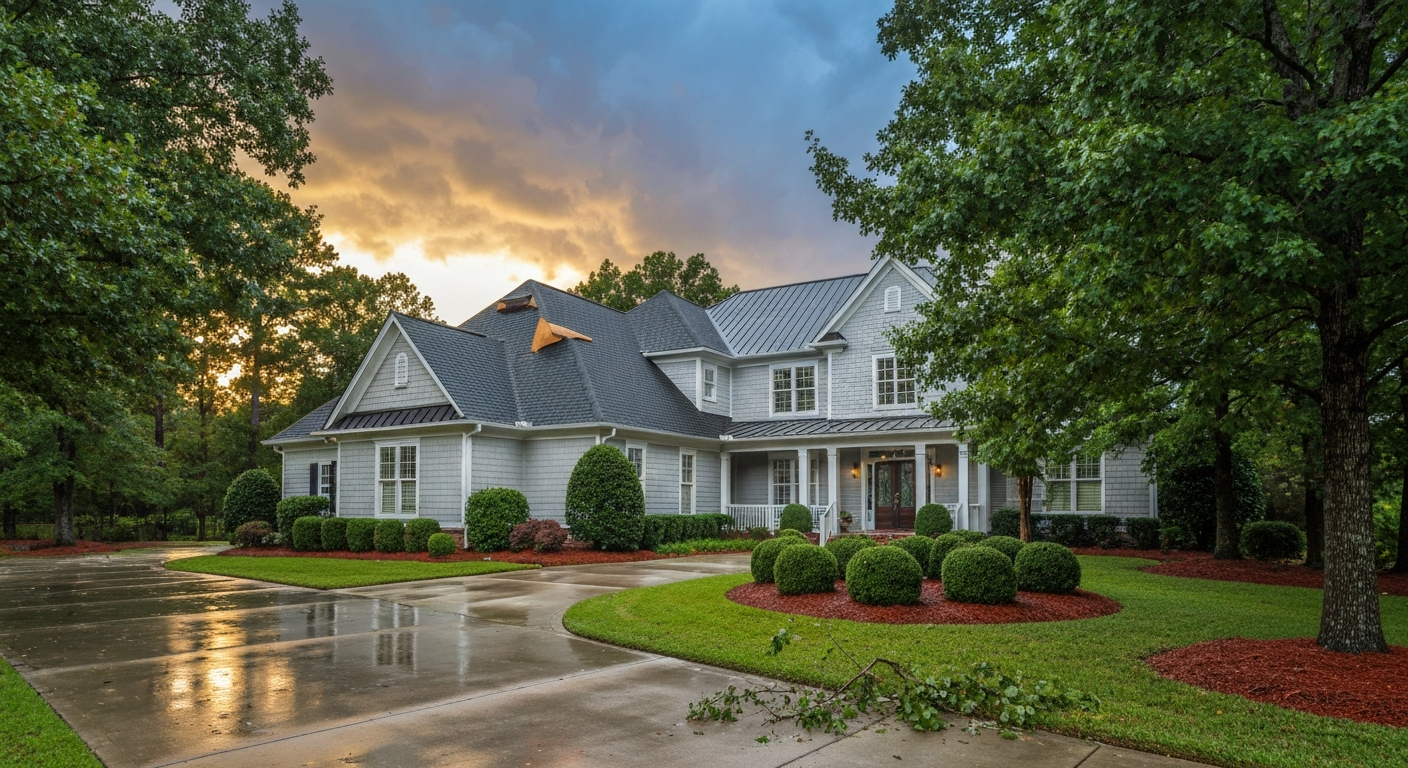
When a powerful storm tears through Braselton, the damage to your roof may not always be obvious from your driveway. Braselton Gwinnett County shingle roof repair after wind damage requires immediate attention to prevent small problems from becoming major structural issues. High winds can compromise your roof’s protective barrier in seconds, leaving your home vulnerable to water intrusion, mold growth, and escalating repair costs. At GCR Construction & Roofing, we have spent 15 years helping homeowners across Gwinnett County respond quickly and effectively when wind damage strikes. Understanding what happens to your shingles during a windstorm and knowing how to respond can save you thousands of dollars while protecting your family and your investment.
Many Braselton homeowners discover wind damage only after the next rain reveals a leak in their ceiling. By then, the damage has spread beyond the roofing materials into the decking, insulation, and interior finishes. This guide walks you through everything you need to know about identifying, documenting, and repairing wind damaged shingles in Braselton GA, including how to navigate the insurance claims process and prevent future damage to your home.
Understanding the mechanics of wind damage helps homeowners recognize why professional inspection matters so much. Wind does not simply blow shingles off your roof. The damage process involves complex aerodynamic forces that can compromise your roof’s integrity in ways that remain invisible for months.
When wind flows over your roof, it creates negative pressure on the leeward side and at the edges. This negative pressure generates an uplift force that pulls shingles away from the deck. Shingles are designed with adhesive strips that bond each layer to the one below, creating a unified barrier against wind and water. When wind speeds exceed your shingles’ rating, this bond can break.
The process often begins at the most vulnerable points: roof edges, ridges, hips, and any area where flashing meets shingles. Once wind lifts a single shingle edge, it creates a gap that allows more wind underneath. This cascading effect explains why one compromised shingle can lead to widespread damage across an entire roof section.
Asphalt shingles become more vulnerable as they age. The adhesive strips lose their effectiveness over time, especially when exposed to Georgia’s intense summer heat followed by cooler fall temperatures. A 15-year-old roof will sustain more damage from the same wind event than a newer installation with fresh adhesive bonds.
Gwinnett County experiences several types of wind events throughout the year, each creating distinct damage patterns. Spring severe thunderstorms often bring straight-line winds that can exceed 60 miles per hour. These storms typically damage the side of the roof facing the wind direction, creating a clear pattern of lifted or missing shingles.
Summer pop-up storms are less predictable but can generate intense localized winds. These events often damage roofs in seemingly random patterns because the wind direction shifts rapidly. Homeowners in Duluth might see damage on their south-facing roof slope while their neighbors in Suwanee find problems on the north side from the same storm system.
Late-season tropical systems occasionally reach Gwinnett County with sustained winds and extended rain. These storms create the most widespread damage because the prolonged wind exposure weakens shingle bonds progressively, and the accompanying rain immediately exploits any breach in the roof’s protective layer.
Braselton sits at a higher elevation than many surrounding Gwinnett County communities, which increases wind exposure during storm events. The rolling terrain that makes Braselton neighborhoods attractive also creates wind channels that concentrate airflow and increase local wind speeds above what weather stations measure at ground level.
Newer developments in Braselton often feature larger homes with complex roof designs including multiple dormers, valleys, and varying roof planes. Each transition point represents a potential weak spot where wind can begin lifting shingles. Homes built on lots that were previously wooded may also face increased exposure as surrounding trees are cleared for new construction, removing natural windbreaks.
The I-85 corridor that runs near Braselton also influences local wind patterns. The cleared land along the highway creates a path for wind to travel with less resistance, potentially increasing wind speeds for homes in adjacent neighborhoods near Buford and the Jackson County border.
WIND DAMAGE REPAIR: ACT FAST OR PAY MORE
Sources: NOAA Storm Data for Georgia • Insurance Information Institute • National Roofing Contractors Association (NRCA)
Knowing what to look for after a storm can help you act quickly and document damage effectively for insurance purposes. Some damage is obvious from the ground, while other problems require a trained professional to identify.
The most obvious sign of wind damage is missing shingles. When you see bare patches on your roof where the underlayment or decking shows through, you know wind has completely removed shingles from that area. These areas need immediate protection from water intrusion.
Lifted shingles may still be attached but are no longer sealed to the shingles below. From the ground, lifted shingles often appear as irregular shadows or lines across your roof surface. The edges catch sunlight differently than properly sealed shingles, creating a visible pattern when you know what to look for.
Creased shingles result from wind bending the material past its flexibility point. These shingles may appear wavy or folded, and the crease creates a permanent weak point where the shingle will eventually crack. Creased shingles typically need replacement even though they remain attached to the roof.
Other visible signs include:
The most costly wind damage is often invisible from the ground. Broken adhesive seals allow water to penetrate beneath shingles without obvious signs until leaks appear inside your home. A shingle can look perfectly normal from your driveway while providing zero protection from the next rain.
Granule loss is another hidden concern. The ceramic granules on asphalt shingles protect the underlying material from UV degradation. Wind-driven rain and debris scrub these granules away, and you may only notice the evidence in your gutters or at downspout discharge points. Heavy granule accumulation after a storm indicates your shingles have sustained surface damage that shortens their remaining lifespan.
Wind can also damage the underlayment beneath your shingles. Synthetic underlayment can tear when shingles lift repeatedly during sustained wind events. Felt underlayment can become saturated if water enters beneath lifted shingles, leading to deterioration that allows future leaks even after shingle repairs.
Homeowners should never climb onto a roof after a storm. Damaged shingles create slip hazards, and structural damage may not be visible until weight is applied. A ground-level inspection using binoculars can identify obvious damage, but it cannot reveal the hidden problems that cause most insurance claims to be underpaid.
Professional assessment with 15 years of storm damage experience makes a significant difference in both damage identification and insurance claim outcomes. Trained inspectors know where to look for subtle damage that homeowners miss. They understand how specific shingle products fail in wind events and can identify manufacturer defects that may have contributed to damage.
A professional inspection also creates documentation that insurance adjusters respect. Detailed photographs, written reports, and expert observations establish the scope of damage clearly and support appropriate claim settlements. Many homeowners who attempt to document damage themselves receive lower settlements because they missed significant damage or failed to present findings in a format adjusters recognize.
The actions you take in the first 24 to 48 hours after wind damage significantly impact both your home’s protection and your insurance claim outcome. Knowing the right steps prepares you to respond effectively.
If you can see obvious holes or missing shingles, temporary protection prevents water damage while you arrange professional repairs. Emergency tarping involves covering damaged areas with waterproof material secured against further wind. This task requires proper safety equipment and rooftop experience.
GCR Construction & Roofing provides emergency response for storm damage roof repair in Gwinnett County. Our crews can typically install temporary protection within hours of your call, preventing secondary water damage that insurance may not cover if you fail to mitigate ongoing harm to your property.
Interior protection is equally important. If you notice ceiling stains or active dripping, place containers to catch water and move furniture and belongings away from affected areas. Photograph everything before you touch it, as this documentation supports your insurance claim.
Do not attempt permanent repairs yourself or allow unqualified workers to begin work before insurance inspection. Insurance policies typically require assessment before repairs, and unauthorized work can void coverage or reduce settlements.
Thorough documentation creates the foundation for successful insurance claims. Begin photographing damage as soon as safely possible after the storm passes. Capture wide shots showing overall roof condition and close-up images of specific damage points.
Document the date and time of the storm using weather reports, news coverage, or social media posts from your area. This timeline establishes that damage resulted from a specific covered event rather than gradual wear or prior unrepaired damage.
Keep all debris that falls from your roof. Damaged shingles, flashing pieces, and even granule accumulations in gutters provide physical evidence of storm damage. Store these materials in a protected location until your insurance adjuster can inspect them.
Create a written log of everything you observe and every action you take. Note when you first observed damage, when you contacted your insurance company, when you arranged temporary protection, and every conversation with insurance representatives. This detailed record protects you if disputes arise later in the claims process.
Insurance policies include deadlines for reporting damage and filing claims. Most Georgia homeowners policies require prompt notification of damage, typically within 24 to 72 hours of discovery. Delayed reporting can give insurers grounds to deny claims or reduce settlements.
Physical evidence also deteriorates quickly. Rain following a wind event can wash away granules that indicate storm damage. Additional weather can worsen initial damage in ways that make the original scope harder to establish. The sooner a professional inspects and documents your roof, the clearer the connection between storm damage and your claim.
Contractor availability also affects timing. Major storm events create high demand for qualified roofing contractors throughout Gwinnett County. Homeowners who schedule inspections promptly after storms secure earlier repair dates than those who wait. During peak storm season, repair delays can stretch into weeks or months.
Understanding what happens during professional wind damage repair helps homeowners make informed decisions and recognize quality workmanship. The process involves more than simply replacing missing shingles.
Professional assessment begins with a complete roof inspection, not just examination of obviously damaged areas. Wind damage often affects multiple roof sections, and thorough inspection ensures nothing is missed. Our inspectors examine every roof plane, all flashing points, ridge caps, drip edges, and gutter attachments.
The assessment identifies three categories of damage: immediate repair needs, areas requiring monitoring, and conditions unrelated to the current storm event. This clear categorization helps homeowners understand what insurance should cover versus maintenance issues that existed before the storm.
Scope determination involves deciding whether damage warrants spot repairs, section replacement, or full roof replacement. This decision depends on the extent of damage, the age and condition of existing shingles, and whether matching materials remain available. A few missing shingles on a newer roof typically warrant repair, while widespread damage on an aging roof may indicate replacement makes more financial sense.
Successful shingle blow-off repair requires matching new shingles to existing materials as closely as possible. This presents challenges because shingle colors fade over time, manufacturers discontinue product lines, and even same-color replacements from different production lots can look noticeably different.
Experienced contractors maintain relationships with multiple suppliers and keep discontinued shingle stock when possible. We also understand how to position replacement shingles to minimize visual contrast, placing newer materials in less visible areas when appropriate.
Proper repair technique involves more than nailing new shingles in place. Repairing wind damage correctly requires:
Through our shingle roofing services, we ensure every repair meets manufacturer specifications and restores your roof’s full protective function.
Several factors indicate when repair is not the right approach. Understanding these thresholds helps homeowners avoid investing in repairs that provide only temporary solutions.
| Factor | Repair Appropriate | Replacement Recommended |
|---|---|---|
| Damage Extent | Less than 30% of roof surface | More than 30% of roof surface |
| Shingle Age | Less than 15 years old | More than 15 years old |
| Material Availability | Matching shingles available | Discontinued or unavailable |
| Prior Repairs | No previous storm repairs | Multiple prior repair layers |
| Deck Condition | Deck intact and solid | Deck damage or deterioration |
| Insurance Coverage | Partial coverage approved | Full replacement approved |
Partial replacement addresses situations where damage concentrates in one roof section while other areas remain sound. This approach replaces all shingles on damaged slopes while leaving undamaged sections intact. Proper partial replacement includes careful transition work where new and old materials meet.
Full replacement becomes the right choice when damage is widespread, existing shingles are near end of life, or matching materials are unavailable. While this represents a larger investment, full replacement provides an opportunity to upgrade to high-wind rated shingles that better resist future storms.
The insurance claims process intimidates many homeowners, but understanding how it works helps you secure fair settlements. Proper preparation and professional support make a significant difference in outcomes.
Georgia law and individual policy terms establish deadlines for reporting damage and filing claims. Most policies require immediate notification of damage, with formal claims filed within one year. However, waiting approaches these deadlines works against you because evidence deteriorates and memories fade.
Insurance companies require specific documentation to process claims. Standard requirements include:
Incomplete documentation is the most common reason claims are underpaid. Insurance adjusters make decisions based on what documentation shows, not what homeowners verbally describe. Every piece of damage needs photographic and written documentation to receive coverage consideration.
Insurance adjusters work for insurance companies, not homeowners. Their job involves assessing damage and recommending settlements within policy terms. Understanding this relationship helps you interact effectively without adversarial confrontation.
Schedule adjuster visits when you can be present. Walk the adjuster through your documentation and point out specific damage areas. Ask questions about anything unclear and request written explanations of coverage decisions. You have the right to understand why certain items are or are not covered.
If an adjuster’s initial assessment seems incomplete, request a reinspection. Insurance companies sometimes send adjusters who lack roofing expertise or who perform cursory inspections due to high workload after major storms. A second inspection, especially with a professional contractor present, often identifies additional covered damage.
Never sign any document releasing the insurance company from further obligation until you are certain all damage has been identified and appropriately compensated. Supplemental claims for additional damage discovered during repairs are common and legitimate.
We have helped Braselton homeowners navigate insurance claims for emergency roof repair situations throughout our 15 years serving Gwinnett County. Our experience with local insurance company practices helps homeowners understand what to expect and how to respond.
Our inspection reports are formatted for insurance review, including detailed damage descriptions, precise measurements, and comprehensive photograph documentation. Adjusters recognize our professional reports and typically rely on our assessments when determining claim settlements.
We coordinate with adjusters directly when homeowners request, attending adjuster inspections to ensure all damage is identified and properly documented. This professional presence often results in more thorough inspections and higher settlements than homeowners achieve alone.
Our estimates follow insurance industry standard formats, making it easy for adjusters to compare our proposed repairs with their coverage calculations. When discrepancies exist, we provide detailed justification for our assessments, supporting homeowners in claim negotiations.
We also explain policy terms and coverage decisions in plain language, helping homeowners understand what their insurance actually covers and identify situations where supplemental claims or appeals may be warranted.
After repairing current damage, smart homeowners take steps to reduce vulnerability to future storms. Material choices, installation quality, and ongoing maintenance all affect wind resistance.
Shingle manufacturers offer products specifically designed for high-wind areas. These shingles feature enhanced adhesive strips, reinforced nailing zones, and sometimes interlocking designs that resist uplift forces better than standard products.
Wind ratings indicate the maximum wind speed shingles can withstand when properly installed. Standard shingles typically carry ratings of 60 to 70 miles per hour. High-wind products achieve ratings of 110 to 130 miles per hour or higher. For Braselton homeowners concerned about storm damage, these upgraded products provide meaningful additional protection.
The cost premium for high-wind shingles is typically 10 to 20 percent above standard products. When considering a full replacement after wind damage, this upgrade often makes financial sense given the reduced risk of future damage and potential insurance premium reductions for wind-resistant roofing.
We also offer metal roofing, TPO roofing, and other alternatives to traditional shingles that provide superior wind resistance for homeowners seeking maximum protection.
Even the best shingles fail if installed incorrectly. Proper wind-resistant installation involves specific techniques that many contractors overlook.
Starter strips along roof edges create a critical first line of defense against wind uplift. These strips must be properly positioned and securely attached, with adhesive strips aligned to bond with the first shingle course. Inadequate starter installation is a leading cause of edge shingle blow-off.
Nail placement and quantity directly affect wind resistance. Manufacturer specifications call for four to six nails per shingle in specific locations within the nailing zone. Nails placed too high, too low, or with insufficient quantity allow shingles to lift under wind pressure. High-wind installations require six nails per shingle rather than the four-nail pattern acceptable in lower-wind areas.
Proper sealing ensures the adhesive bond between shingle courses that prevents wind intrusion. Shingles must be pressed firmly after installation to activate adhesive strips, and installation during appropriate weather conditions ensures proper curing. Shingles installed in cold weather may never develop full adhesive strength.
Professional inspection after each storm season identifies minor damage before it becomes major problems. Small lifted areas can often be resealed without shingle replacement if caught early. Missing granules indicate areas to monitor. Degraded flashing can be replaced before leaks develop.
Annual professional inspections cost far less than emergency repairs after preventable damage. Our maintenance inspections for homeowners across Lawrenceville, Snellville, Loganville, and throughout Gwinnett County include written reports documenting current roof condition and identifying any items needing attention.
Between professional inspections, homeowners should conduct ground-level observations after significant weather events. Look for obvious changes in roof appearance, new debris in gutters, or shingle pieces in the yard. Report any concerns promptly for professional evaluation before the next rain.
Gutter maintenance also affects roof performance during wind events. Clogged gutters allow water backup that can push under shingle edges during wind-driven rain. Clean gutters at least twice annually and after major storms to ensure proper water flow. Our gutter services help homeowners maintain proper drainage along with roof condition.
Tree maintenance reduces both debris impact and wind channeling effects. Trim branches that overhang your roof or could strike roofing materials during storms. Consider removing dead trees or those with compromised root systems that could topple in high winds.
Wind damage repair should begin as soon as safely possible after a storm passes. The first 24 to 48 hours are critical for documenting damage, installing temporary protection if needed, and notifying your insurance company. Even minor damage that does not appear to be leaking can worsen rapidly with subsequent weather. Lifted shingles allow water penetration that may not show inside your home immediately but causes cumulative damage to decking and insulation. Additionally, insurance companies expect prompt notification and mitigation efforts. Delays in reporting or protecting your roof can result in claim denials or reduced settlements. We recommend scheduling a professional inspection within one week of any significant wind event, even if you do not observe obvious damage from the ground.
Most Georgia homeowners insurance policies cover wind damage to roofing materials, but coverage specifics vary significantly between policies. Standard policies typically cover repair or replacement costs minus your deductible when wind causes sudden damage to your roof. However, policies may exclude damage resulting from lack of maintenance, pre-existing conditions, or wear-and-tear that allowed wind to cause damage. Some policies include separate wind or hurricane deductibles that are higher than standard deductibles. Your policy may also have actual cash value coverage rather than replacement cost coverage, meaning depreciation reduces your settlement amount. Review your policy carefully or contact your agent to understand your specific coverage before filing a claim. Professional inspection and documentation significantly increase the likelihood of receiving fair claim settlements for covered damage.
Yes, wind frequently damages shingles without removing them from the roof. Wind uplift can break the adhesive seal between shingle layers without lifting the shingle completely off the deck. These broken seals create gaps where water enters during rain, causing leaks and deck damage even though the shingle appears intact from ground level. Wind can also crease shingles by bending them past their flexibility point, creating permanent weak spots that eventually crack and fail. Granule loss from wind-driven rain or debris impact degrades shingle surfaces without obvious visible change from a distance. High winds may also loosen nails through repeated lifting and settling of shingles, reducing fastening effectiveness for future wind events. This hidden damage explains why professional inspection after significant wind events is essential even when your roof looks undamaged from the ground.
Hidden wind damage typically requires professional inspection to identify with certainty, but several indicators suggest your roof may have sustained unseen damage. Check your gutters and downspout discharge areas for unusual amounts of granules, which indicate surface damage to your shingles. Look for subtle changes in how light reflects off your roof, which can indicate lifted or misaligned shingles. Inside your home, check attic spaces for new daylight penetration, water stains, or moisture on insulation. After rain following a wind event, look for any new ceiling stains or dampness, which indicate water has breached your roofing system. If your neighbors experienced visible wind damage, your home likely sustained similar forces even if obvious damage is not apparent. When in doubt, professional inspection provides certainty and creates documentation for any insurance claims that may become necessary if damage is found.
If you have experienced wind damage or want peace of mind after recent storms in Braselton or anywhere in Gwinnett County, schedule your free wind damage inspection with GCR Construction & Roofing today. Our experienced team serves homeowners throughout Auburn, Berkeley Lake, Buford, Dacula, Duluth, Grayson, Lawrenceville, Lilburn, Loganville, Mulberry, Norcross, Peachtree Corners, Rest Haven, Snellville, Sugar Hill, and Suwanee. Call us at (470) 913-7148 or email support@gcrcontracting.com to speak with a roofing professional who understands Gwinnett County storm patterns and insurance requirements. With 15 years of experience protecting local homes, we respond quickly when wind damage threatens your property. Your Roof. Our Passion.